

Your uncle in Gurugram calls to say the buyer for your late father's flat is ready, but you're eight time zones away and don't know a single advocate who handles property matters. Finding trustworthy NRI lawyers in India comes down to three things: verifying credentials before you pay, fixing fees in writing, and getting one dedicated person, not a rotating cast of juniors, who updates you on your own clock.
Key Takeaways
- Match specialty to case type: a property dispute, a succession matter, and a Power of Attorney drafting job need different lawyers, not one generalist advocate.
- Verify before you pay: ask for the lawyer's Bar Council enrollment number and a named profile before any consultation fee changes hands.
- Fixed fees beat hourly billing: hourly arrangements are hard to audit from abroad; a written, upfront fee removes that risk entirely.
- Power of Attorney needs precision: a POA drafted for the wrong transaction, or notarised incorrectly for your country, can get rejected at an Indian sub-registrar's office.
- One point of contact matters more than firm size: a dedicated case manager who tracks hearing dates and documents saves NRIs more stress than a large but disorganised firm.
At a Glance: What to Check Before You Hire
| What to Check | Why It Matters | Red Flag |
|---|---|---|
| Bar Council enrollment | Confirms the person is legally licensed to practice | Refuses to share enrollment number |
| Case-type specialisation | Property, inheritance and family law each move differently | Claims to handle "everything" |
| Fee structure | Fixed fee is easier to plan and audit remotely | Vague quotes, "we'll discuss later" |
| Communication cadence | You need updates that don't require you to chase | No fixed update schedule offered |
| Power of Attorney handling | Wrong drafting or notarisation voids the document | Pushes a generic POA template with no review |
| Local court familiarity | Registrars and courts in Delhi NCR move faster with local counsel | Lawyer has never appeared before your specific court |
1. Start With the Kind of Case You Actually Have
A lawyer who drafts contracts all day isn't the right person for a contested inheritance matter. Property disputes need someone who reads sale deeds and encumbrance certificates for a living. Family cases need someone comfortable with maintenance and custody hearings. Documentation work, wills, gift deeds, POA drafting, needs precision, not courtroom flair.
Generalist advocates often take on NRI cases because the retainer is attractive, then stall once the matter needs specialist filings. Ask directly: "How many cases like mine have you closed in the last two years?" A confident, specific answer is a good sign. A vague one isn't.
If your issue involves inheritance, read our guide on preparing succession certificate documents from abroad before your first call, so you walk in knowing what paperwork the lawyer will ask for.
2. Verify Credentials Before You Pay Anything
Every practicing advocate in India carries a Bar Council enrollment number. It's a public record you can ask for and check. Don't treat this as rude, treat it as basic due diligence, the same way you'd check a doctor's registration before surgery.

A serious lawyer or platform shares a full profile, name, years of practice, specialisation, before you commit a rupee. Fintolit shows the actual lawyer's background upfront for this reason: you know exactly who you're paying for, not a placeholder name that changes after payment.
How Do NRIs Verify a Lawyer's Credibility From Abroad?
Ask for the Bar Council enrollment number, request examples of similar closed cases, and use a platform that shows a verified lawyer profile before payment. These three steps catch most fraud attempts and mismatched-specialty hires before they cost you money.
You can also cross-check enrollment details through your state Bar Council's public search tool, and ask the lawyer for a written engagement letter that names the case type and scope of work.
Need a Lawyer for clarity on your case?
3. Ask About Fees Upfront, in Writing
"Lawyer fees in India" and "how much does a lawyer cost in India" are two of the most searched questions among NRIs, and for good reason. Hourly billing is nearly impossible to audit from another country. You can't sit in the office and watch the clock.
Fixed, upfront pricing solves this. You know the number before the work starts, and there's no surprise invoice for a phone call or an email. Ask specifically whether drafting, court filing fees, and any local travel for hearings are included or billed separately.
For a full breakdown of typical cost structures across case types, see our guide on legal fees in India for 2026, which covers property, family, and documentation matters separately.
4. Set Up Power of Attorney the Right Way
Most NRI legal matters, selling a flat, managing a bank account, appearing at a registrar's office, need a Power of Attorney. Get the type wrong and the document gets rejected at the exact moment you need it to work.
A specific POA, limited to one transaction, is safer than a general one that hands over broad authority. Sign it in front of a notary in your resident country, then get the required apostille or attestation depending on whether that country is a Hague Convention member.
Common mistakes include naming the wrong property description, skipping the apostille step entirely, or using a template that doesn't match Indian registration requirements. A lawyer who reviews the draft before you sign catches these errors early, not after the sub-registrar's office rejects it.
5. Decide Between Online Consultation and a Local Representative
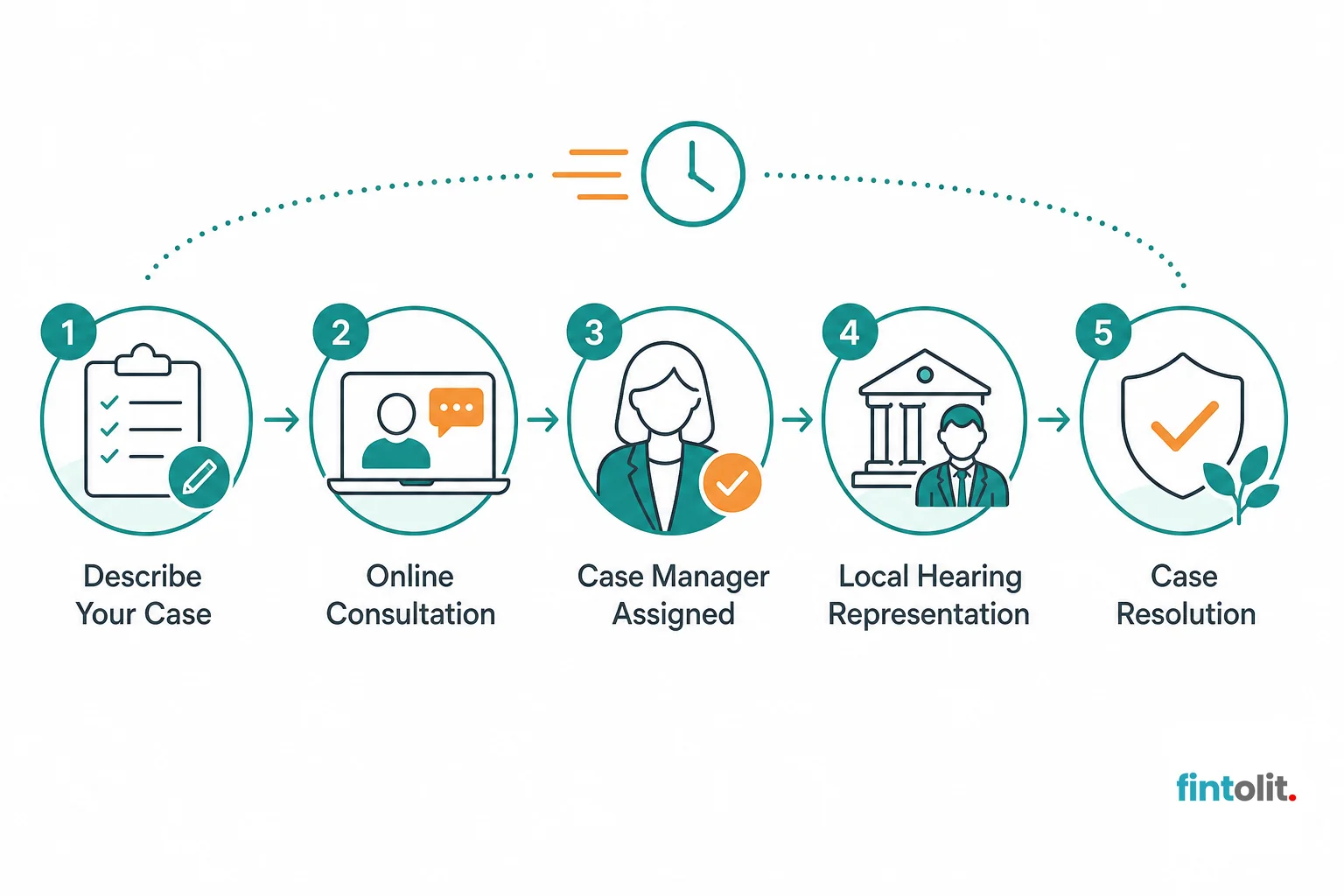
Strategy calls work fine over video. Court appearances, registrar visits, and document verification usually need someone physically present in India. The smart setup uses both: an online consultation to plan, and a local representative to execute.
| Model | Best For | Limitation |
|---|---|---|
| Online-only consultation | Quick advice, document review, strategy calls | No one physically present for court or registrar work |
| Traditional local law firm | Long-standing property or family matters with regular hearings | Hard to reach on your time zone, often hourly billing |
| Hybrid model (online + case manager) | NRIs needing both remote strategy and someone on the ground | Fewer providers offer this combined structure |
Fintolit's setup covers both ends: a 60-minute consultation with a verified specialist, and if the matter needs a physical presence in Delhi, Gurugram, or Noida, the same lawyer stays on the case rather than handing it to someone new. You can read more in our guide to online legal consultation for NRIs.
6. Insist on a Single Point of Contact
Nothing frustrates an NRI client faster than emailing a firm and getting a reply from someone new each time, someone who has to re-read the file before answering. A dedicated case manager fixes this. One person tracks your hearing dates, your document status, and answers your questions without you repeating the backstory.

It moves fast when someone actually owns your file. Ask any prospective lawyer or platform: "Who exactly will I be talking to next month, and will it be the same person?" If the answer is unclear, that's worth noting before you sign anything.
Our post on how a legal case manager helps you walks through what this role actually does day to day, from chasing court dates to translating legal jargon into plain updates.
7. Watch for These Red Flags
- No written engagement letter: if the scope of work isn't on paper, disputes over what was promised become your word against theirs.
- Reluctance to name the lawyer before payment: a firm that won't tell you who's handling your case until after you pay is hiding something.
- Pressure to sign a broad POA quickly: urgency around signing away wide authority is a warning sign, not a convenience.
- Vague fee quotes: "we'll figure out the cost as we go" almost always ends up more expensive than a fixed quote.
- No update schedule: if nobody commits to telling you what happened after each hearing, you'll be the one chasing for months.
Why Delhi NCR Matters for NRI Property and Inheritance Cases
A large share of NRI-owned property sits in Delhi, Gurugram, and Noida, cities that saw heavy NRI investment through the 2000s and 2010s. That concentration means local registrars, sub-registrar offices, and civil courts in these areas see NRI cases regularly, and lawyers who work there often know the specific documentation quirks each office expects.
Need a Lawyer for clarity on your case?
A lawyer based in Delhi who has actually filed at your property's local sub-registrar's office saves weeks compared to someone learning that office's process for the first time. If your matter touches Noida specifically, our piece on finding trusted lawyers in Noida covers the local process in more detail.
Frequently Asked Questions
How do I find a good lawyer in India from abroad?
Look for a named, verifiable lawyer profile with Bar Council enrollment, a specialisation that matches your case, and a written fee quote before you pay anything. Platforms that share the lawyer's identity upfront remove most of the guesswork involved in a remote hire.
What are typical lawyer fees for property disputes in India?
Fees vary by case complexity, city, and whether the matter is contested or straightforward. Rather than quote a single figure that won't fit your situation, ask for a written, fixed quote scoped to your exact matter before engaging anyone; our guide on legal documentation costs explains what drives price differences.
Can I hire an Indian lawyer without ever visiting India?
Yes. Most consultations, document review, and case strategy can happen entirely online, with a local representative or case manager handling any in-person requirement like a court appearance or registrar visit on your behalf.
You don't need to fly back to India to protect a property, settle an inheritance, or fix a family matter the right way. Book a consultation with a verified lawyer who stays on your case from the first call to closure, or chat with us on WhatsApp if you'd rather talk through your situation before booking anything.
Recommended Resources
You're just getting to the good part.