You can copyright a song in India the moment you write it down or record it, no paperwork required. Registration is optional, but it hands you a dated, government-issued paper trail if anyone ever copies your work. That single document turns "I wrote this first" into something a court can actually check.
Key Takeaways
- Protection is automatic: A song is copyrighted the instant it exists in fixed form, whether that's a phone recording or a lyric sheet.
- One song, three copyrights: Lyrics, the musical composition, and the sound recording are each treated as separate works with their own owner.
- Fees depend on category: Government charges under the Copyright Rules run from ₹500 for a literary or musical work up to ₹2,000 for a sound recording, per the fee schedule reported in this 2026 fee guide.
- It takes time: Expect a 30-day objection window before anything moves, with total processing stretching into months depending on the office's backlog.
- Ownership disputes need a lawyer, not a form: Co-writer splits, label contracts and infringement notices are where DIY filing runs out of road.
At a Glance: Copyright a Song in India
| Element | Detail |
|---|---|
| Legal status of an unregistered song | Automatically protected under the Copyright Act, 1957 the moment it's fixed in tangible form |
| Is registration mandatory? | No, Section 45 makes it optional ("may register"), not compulsory |
| Works inside one song | Lyrics (literary work), composition (musical work), sound recording (separate work) |
| Government fee, literary/musical work | Around ₹500 per work |
| Government fee, sound recording | Around ₹2,000 per work |
| Filing mode | Online via the Copyright Office portal, Form XIV |
| Objection window | 30 days after a diary number is issued |
| Typical processing time | Several weeks to a few months, depending on objections and office load |
Does Your Song Already Have Copyright Protection?
Yes. Under Indian law, copyright attaches automatically the moment your song exists in a fixed, tangible form, whether that's a scribbled notebook page or a voice memo on your phone. You don't file anything, and you don't pay anything, for that baseline protection to exist.

So why register at all? Because "I made this first" is hard to prove in a dispute without a paper trail. Section 45 of the Copyright Act, 1957 uses the word "may," not "shall," which is why registration is described as permissive rather than compulsory in this practical guide to Indian copyright law.
A registration certificate carries evidentiary weight in court, and it gives you a clean, dated record to hand a distributor, a label, or a judge.
Think of it as insurance you rarely need until the one day you badly do. If a producer claims your melody first, or a stranger uploads your lyrics as their own, an unregistered song leaves you arguing dates and witnesses. A registered one leaves you pointing at a certificate.
1. Identify the Separate Works Inside Your Song
Before you file anything, work out what you're actually registering. A three-minute song is not one copyright, it's usually three, each with a different first owner:
- Lyrics: Treated as a literary work. The person who wrote the words owns this, unless it was created under an employment contract that says otherwise.
- Musical composition: The melody, chords and arrangement are a separate musical work, owned by the composer.
- Sound recording: The specific recorded version, vocals, instruments, mix, is its own copyright, often owned by whoever paid for and produced the session.
If you wrote the lyrics, composed the tune, and recorded it yourself in your bedroom, you likely hold all three. If a friend played session guitar, or a studio funded the recording, ownership can split several ways before you've even opened the registration portal.
2. Gather the Documents You Need
Filing goes faster when your paperwork is ready before you log in. For most song registrations you'll need:
Need a Lawyer for clarity on your case?
- A completed Form XIV with the work's title, category, and language
- Details of every author, publisher and owner involved, with their addresses
- Identity proof for the applicant (Aadhaar, PAN or passport)
- A "soft copy" of the work itself: the lyric text, a notation or lead sheet for the composition, and the audio file for the sound recording
- A No Objection Certificate from any co-author, publisher or producer who isn't the applicant but has a stake in the work
- A statement of particulars describing how the work was created and whether it's published or unpublished
Missing an NOC from a co-writer is the single most common reason an application stalls. If your song has more than one credited writer, sort that signature out before you file, not after.
3. File the Application Online
What does the copyright filing process actually involve?
Filing to copyright a song in India runs as a four-step online process: submit the application, deposit the work itself, disclose its publication status, then wait through examination. Each stage happens on the Copyright Office portal, and a diary number is issued as soon as you submit, which is your proof of filing.
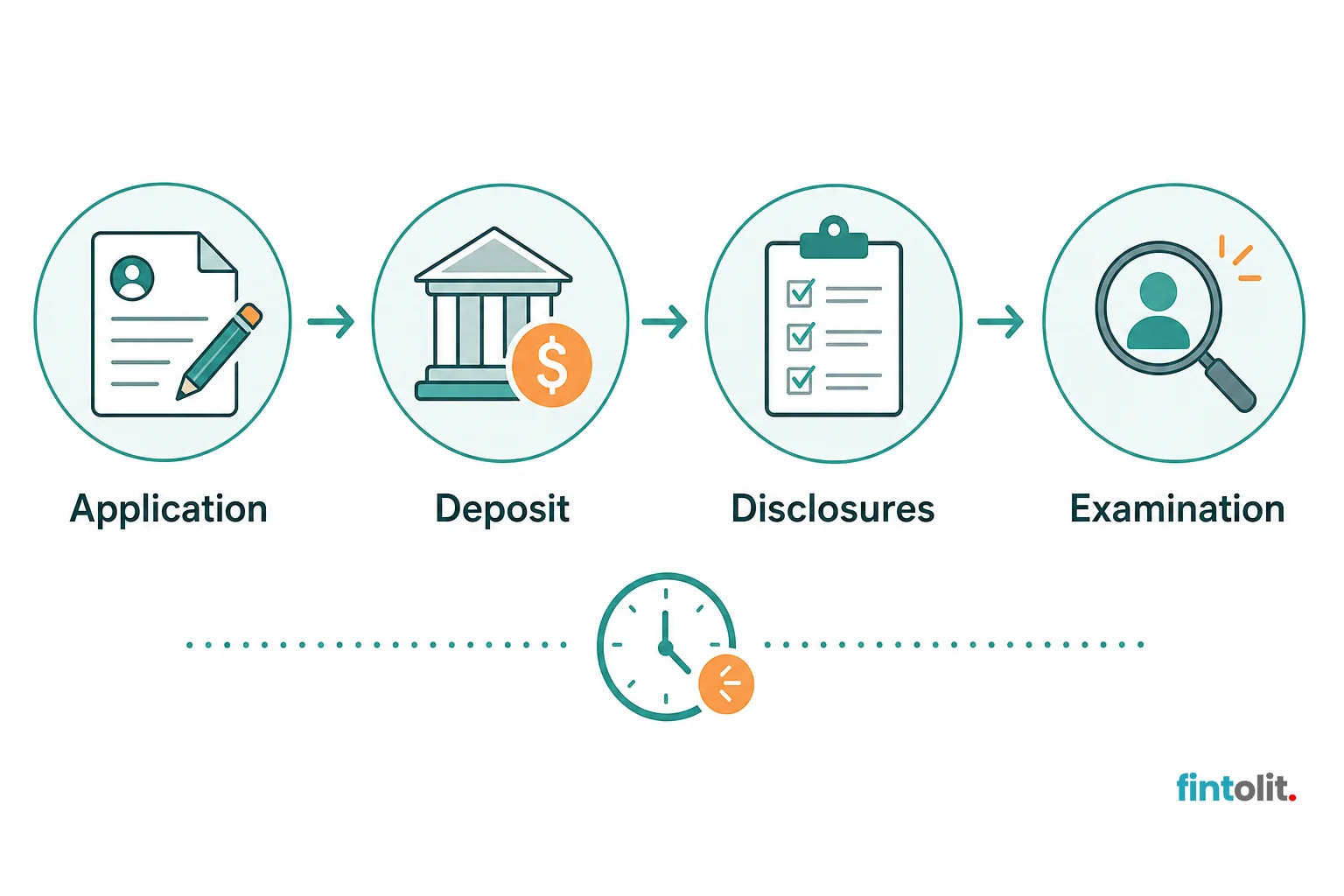
The four steps, as laid out in this 2026 process guide, break down as:
- Application: File Form XIV with the work's description and every author's details.
- Deposit: Upload the soft copy of the lyrics, composition and recording, or send physical copies where the format demands it.
- Disclosures: State whether the work is published or unpublished, since that affects what supporting proof you attach.
- Examination: The Registrar reviews the file, opens a 30-day objection window, and either raises queries or moves the work into the Register of Copyrights.
If nobody objects and the examiner has no queries, you get a signed registration certificate. If someone does object, be ready for correspondence, and possibly a hearing, before the file closes.
4. Pay the Applicable Government Fees
Government fees are fixed by category under the Copyright Rules, 2013, not negotiated case by case. Based on the fee schedule reported in this 2026 copyright fee breakdown, a literary, dramatic, musical or artistic work costs around ₹500 per registration, while a sound recording costs around ₹2,000.
Here's the practical catch for songwriters: if you're registering all three elements of one song separately, the lyrics, the composition and the recording, you pay the applicable fee for each one. Budget for that upfront rather than being surprised mid-filing. There's no separate "startup discount" or reduced government fee tier for independent musicians, so the amount is the same whether you're a first-time bedroom producer or an established composer.
How Long Does Copyright Registration Take in India?
Copyright registration in India typically takes several weeks to a few months from filing to certificate, built around a mandatory 30-day objection window after your diary number is issued. Delays stack up when a co-author's NOC is missing, when the examiner raises a query, or when the office is working through a backlog.
Processing has occasionally slowed further during administrative disruptions. Applicants should build in buffer time and avoid assuming a fixed date, since the office itself has flagged delays and backlogs affecting normal operations, per its own processing-times guidance. Filing early, well before a release date or a distribution deal deadline, protects you from that uncertainty.
What Happens If Someone Copies Your Song Anyway?
A registered copyright gives you documented proof of ownership to act on, but it doesn't stop infringement by itself. If someone lifts your lyrics, samples your recording without permission, or claims your melody, you'd typically start with a cease-and-desist legal notice, then escalate to a civil suit for damages and an injunction if the notice is ignored.
Need a Lawyer for clarity on your case?
Unregistered work can still be defended in court, since protection exists automatically, but proving the timeline of creation gets harder without a certificate. That's especially true now that lyrics and recordings circulate fast online, where an AI tool or an anonymous account can republish your work within hours. A written record of when you registered, and what you registered, shortens that argument considerably.
When Should You Bring In a Lawyer?
Bring in a lawyer when ownership isn't simple: multiple co-writers, a label contract on the table, or someone has already copied your song. A one-time filing for a solo bedroom track rarely needs one, but split royalties, publishing deals and infringement disputes involve contract terms most songwriters aren't trained to read.
This is where DIY filing quietly turns risky. A publishing agreement that assigns your composition rights away, a producer's contract that's vague about who owns the master recording, or a co-writer who disappears mid-project all need someone who can read the clause, not just the form.
If you're based in Delhi, Gurugram or Noida and want that conversation to happen at your own table rather than a law office lobby, Fintolit's online legal consultation in Delhi connects you with a verified lawyer for a fixed, upfront fee, with a dedicated case manager tracking your filing from first draft to final certificate.
It also helps to know what you're actually paying for before that first call. If cost is the thing holding you back, this breakdown of lawyer consultation cost in India walks through what a typical session covers, so there's no guessing at the fee before you've even booked.
Musicians juggling day jobs, gigs and studio time rarely have hours free for a law office visit. If you'd rather sort your song's paperwork from your own living room, book a consultation with Fintolit and get matched with a lawyer who handles copyright, publishing and IP disputes specifically, not a generalist working from a template.
Frequently Asked Questions
Can I copyright a song for free in India?
Baseline protection is free and automatic the moment you create the song. Formal registration with the Copyright Office is not free; it carries a government fee per work category, plus any professional fee if you use a lawyer to file on your behalf.
Who owns the copyright if I hire a session musician?
Ownership depends on your written agreement, not just who played the part. Without a clear contract assigning rights, a session musician's specific performance contribution can create ambiguity, which is exactly the kind of gap a properly drafted agreement closes before recording day.
Is copyrighting the lyrics different from copyrighting the whole song?
Yes. Lyrics register as a literary work on their own, separate from the musical composition and the sound recording. Many songwriters register only their lyrics first, then handle the composition and recording once the track is finished, since each is a distinct filing under the Copyright Act, as this guide to copyrighting lyrics in India explains.
Do I need a lawyer to file a copyright application?
No, the online portal is designed for individual applicants to file directly. A lawyer becomes useful once co-authorship, publishing deals or a dispute enters the picture, since those situations involve legal drafting and negotiation the standard form doesn't cover.
A song's real financial value often comes from the deals built on top of it, sync licensing, streaming splits, cover permissions. Getting the ownership paperwork right at the start protects every deal that follows.
Your song deserves more than a folder of half-finished forms and guesswork about who owns what. Whether you're untangling a co-writer split, reviewing a label contract before you sign, or you just want someone to double-check your registration paperwork, talk to a verified Fintolit lawyer who handles these cases across Delhi NCR.
Need a Lawyer for clarity on your case?
Chat with us on WhatsApp for a quick first read on your situation, or go ahead and book your consultation to get your song's paperwork properly locked down.
Recommended Resources
You're just getting to the good part.