

Most people put off writing a will because they think it needs a lawyer's office, thick legal paper, and a hundred signatures. It doesn't. Learning how to draft a will in India comes down to six things: listing your assets, naming an executor, writing it clearly, signing it with two witnesses, deciding whether to register it, and storing it somewhere safe. No stamp duty is needed in most states, and a plain sheet of paper works if the content is sound.
Key Takeaways
- No mandatory cost: Writing a will in India doesn't require stamp paper or court fees in most states; registration, if you choose it, costs a modest fee at the Sub-Registrar's office.
- Two witnesses, not beneficiaries: The Indian Succession Act, 1925 requires two witnesses to sign, and they should have no financial stake in the will.
- Registration is optional but protective: An unregistered will is valid, but a registered one is far harder for relatives to challenge or claim was tampered with.
- Clarity prevents court fights: Vague property descriptions or missing residuary clauses are the top reasons wills get contested in Delhi NCR courts.
- A lawyer's review catches what self-drafted wills miss: Undue influence claims, ambiguous wording, and incomplete asset lists are easy to spot with a specialist family lawyer's eyes.
Will Drafting at a Glance
| Aspect | Requirement / Detail |
|---|---|
| Legal basis | Indian Succession Act, 1925 (for non-Muslims) |
| Minimum age to make a will | 18 years, sound mind |
| Stamp duty | Not required in most Indian states |
| Witnesses needed | Two, neither should be a beneficiary |
| Registration | Optional, done at local Sub-Registrar's office |
| Registration cost | Minimal registration fee, varies by state |
| Can it be changed? | Yes, anytime through a new will or a codicil |
| Where to store it | Bank locker, trusted family member, or registrar's custody |
Delhi NCR households often hold multiple assets, a self-occupied flat in Noida, a plot in Gurugram, some fixed deposits, maybe a shop passed down from parents. Without a will, all of that gets divided by succession law, not by what you actually wanted. That's usually when families end up in property disputes that take years to untangle in court.
1. Decide What Goes Into Your Will
Start with a plain list. Write down every property you own, every bank account, fixed deposits, mutual funds, jewellery, and anything else with real value. Against each item, name the person who should get it. Use full names and relationships, not just "my son" or "my daughter" if you have more than one.
Add a residuary clause near the end. This single line says who gets anything you forgot to mention or acquire later, like a new car or a savings account you open next year. Skip this clause and that leftover asset gets distributed by default succession rules, which may not match your wishes at all.
If your estate includes agricultural land, business shares, or property in more than one state, be extra precise. Mention survey numbers, registration details, and exact addresses. A description like "my house in Delhi" invites a fight if you own two houses in Delhi.
2. Choose Your Executor
Your executor is the person who makes sure your will is actually carried out after you're gone. This could be your spouse, an adult child, a trusted friend, or a professional. Pick someone organized and willing to deal with paperwork, banks, and possibly the courts.
- Name a backup executor in case your first choice is unavailable or unwilling later.
- Confirm with the person before naming them; an unwilling executor can slow everything down.
- If your estate is complex, spanning multiple cities or businesses, consider naming a lawyer or professional executor alongside a family member.
3. Write the Will in Clear Language
Open the document with your full name, age, address, and a line stating you are of sound mind and writing this will voluntarily. This detail matters more than it sounds. It's often the first thing challenged when someone claims a will was forced or written under pressure.
Need a Lawyer for clarity on your case?
Keep sentences short. Say exactly which asset goes to which person, in which proportion if it's shared. Avoid words like "most of my property" or "a fair share." Courts don't like guessing, and neither do siblings who feel shortchanged.
Date the will and mention the place where it's signed. If you ever write a second will, the most recently dated one usually overrides the earlier version, so this detail carries real weight.
4. Sign the Will With Two Witnesses
Once the content is final, sign every page. Then bring in two witnesses who watch you sign and sign themselves. They aren't confirming what the will says, just that you signed it willingly and were mentally present while doing so.
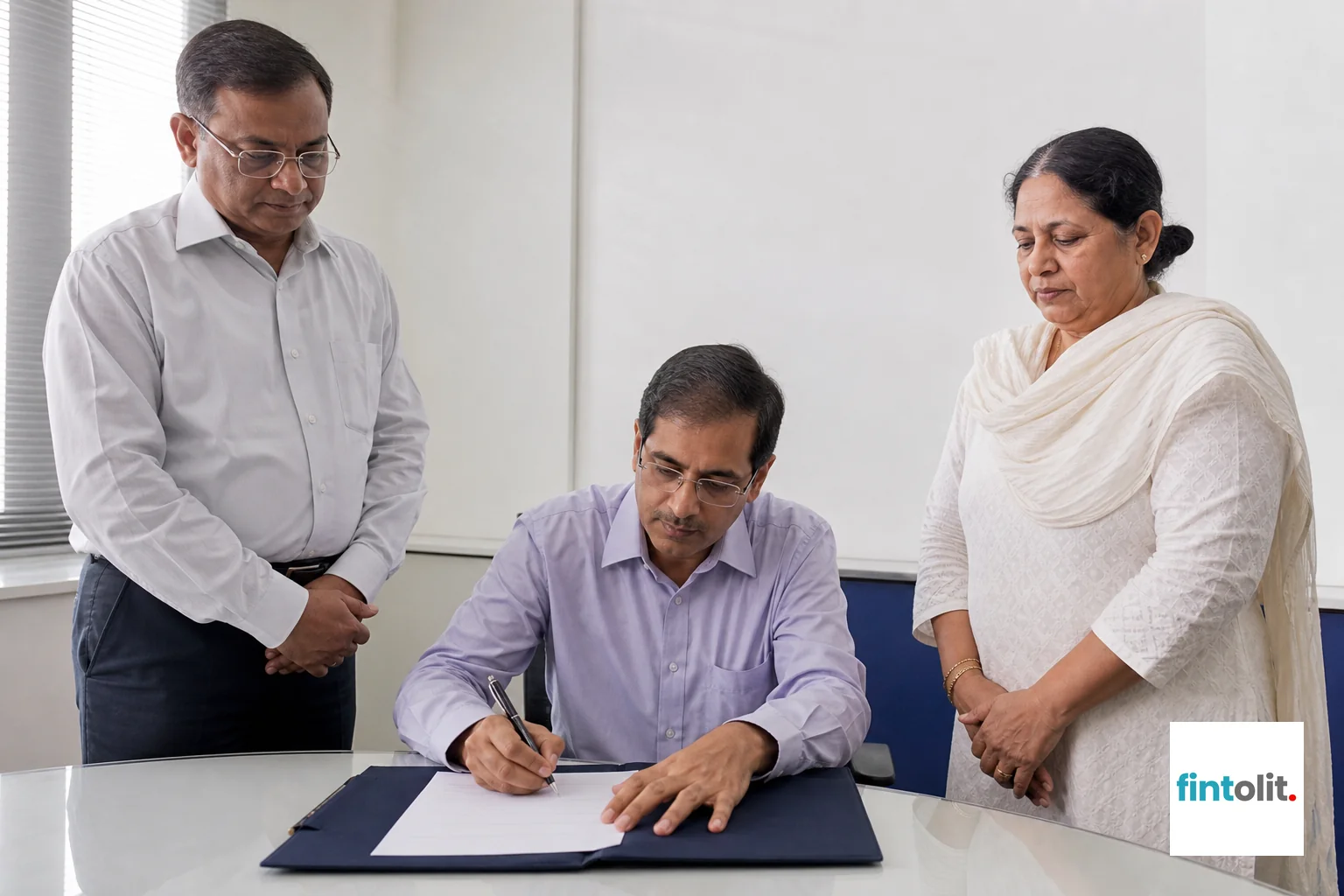
Pick witnesses carefully. Neither should benefit from the will in any way. If a witness is also a beneficiary, that gift to them can become void, or worse, the whole will can face a challenge in court. Neighbors, colleagues, or your family doctor often make better witnesses than relatives who stand to inherit.
5. Registration: Optional But Smart
A will doesn't legally need to be registered to hold up in India. You can write it, sign it with witnesses, and it stands valid on its own. That said, registering it at your local Sub-Registrar's office adds a layer of protection that's hard to argue against later.
Here's what registration actually does for you:
- It creates an official government record of the will's existence and date.
- It becomes far harder for anyone to claim the will was forged, altered, or backdated.
- The registrar keeps a certified copy, so even if the original is lost or damaged, a copy exists.
The registration fee is small compared to what a family might spend fighting a will dispute in civil court, a process that can drag on for years. If you're weighing whether to register, think about how many people stand to inherit and how likely disagreement is. More heirs generally means more reason to register.
6. Store It Somewhere Safe and Tell Someone
A will that nobody can find is as good as no will at all. Keep the original in a bank locker, with your executor, or in the safe custody of the registrar's office if you registered it. Give your executor and one trusted family member a copy, or at least tell them where to find it.
Life changes, and your will should too. Update it after marriage, divorce, the birth of a child, buying new property, or selling off assets you already mentioned. An outdated will can cause as much confusion as having none at all.
Why a Lawyer Matters for a Will That Actually Holds Up in Delhi and Beyond
Delhi NCR sees a steady stream of will disputes in family courts, often between siblings who each believe their version of "fair" was what the parent intended. A lawyer's job isn't just to type up your wishes. It's to catch the wording that a disgruntled relative could later use to challenge everything.

A specialist family lawyer checks for gaps a self-drafted will often misses: unclear property boundaries, missing residuary clauses, witnesses who shouldn't have signed, and language that could be read as evidence of undue influence. These are exactly the details a court looks at first when a will is contested.
This is where Fintolit fits in. Instead of guessing which lawyer to trust or worrying about a fee that balloons after the first meeting, you get a verified family lawyer with 10+ years of experience, a fixed upfront fee, and a dedicated case manager who follows your will drafting from the first conversation to the final signed copy. If you'd rather not travel to a chamber, their "Lawyer at Home" option brings the same verified lawyer to your home in Delhi, Gurugram, or Noida for a private, unhurried session.
Need a Lawyer for clarity on your case?
If your family already has property spread across generations without a clear will, it's worth reading about the difference between legal heir certificates and a proper will, since the two solve very different problems. And if a dispute has already started over inherited property, this guide on family court processes shows how such matters typically move through the system.
You can also compare the cost of getting this done right versus doing it alone by reading how to check lawyer fees before hiring in India, so there are no surprises before you even start.
Common Mistakes That Lead to Will Disputes
Most will disputes trace back to a handful of avoidable errors:
- Vague property descriptions: Writing "my flat" when you own two flats invites confusion and legal challenge.
- Excluding a family member without a reason: Leaving out a legal heir without any explanation often triggers suspicion and litigation, even if your reasons were valid.
- Skipping the residuary clause: Assets acquired after the will was written, and never mentioned, get distributed by default succession rules.
- Not updating after big life events: Remarriage, a new child, or a property sale can make an old will contradict your actual current wishes.
- Choosing a beneficiary as a witness: This can void that person's inheritance and open the door to broader challenges.
A will written in one sitting without professional review often looks fine until someone with a financial interest reads it closely. That's usually the moment small ambiguities turn into court cases.
Frequently Asked Questions
Do I need a lawyer to write a will in India?
No, it's not a legal requirement. You can write and sign a valid will on your own with two witnesses. That said, a lawyer's review catches wording problems and missing clauses that often surface only after a dispute has already started, when it's too late to fix them easily.
Is a handwritten will valid?
Yes. A handwritten will, sometimes called a holographic will, is valid in India as long as it's signed by the testator and witnessed by two people who aren't beneficiaries. What matters is the content and proper signing, not whether it's typed or handwritten.
Can a will be changed later?
Yes, anytime, as many times as you want. You can either write a fresh will that states it revokes all earlier ones, or add a codicil, which is a short amendment attached to the existing will. Always date any new version clearly so there's no confusion about which one is current.
What happens if there is no will?
Your assets get divided according to succession laws based on your religion, usually among your spouse, children, and sometimes parents, in fixed shares you don't get to choose. This is often when families need a legal heir certificate just to access bank accounts or transfer property, a process that takes longer and involves more paperwork than a clear will would have.
Does a will need to be on stamp paper?
No. Most Indian states don't require stamp duty on a will. Plain paper is fine, as long as the content, signatures, and witnesses meet the legal requirements under the Indian Succession Act.
Writing your own will is possible, but getting it wrong costs your family far more than getting it reviewed properly costs you now. If you want a verified family lawyer to draft or review your will, with a fixed fee and one dedicated case manager handling everything from start to finish, you can book a consultation today. Prefer to talk it through first? Chat with us on WhatsApp and get your questions answered before you commit to anything. Your family's peace of mind is worth the hour it takes to get this right.
Need a Lawyer for clarity on your case?
You're just getting to the good part.