

A client who has gone quiet after receiving your final deliverable still owes you every rupee agreed upon, and Indian law gives you concrete, enforceable ways to collect it. The fastest route rarely starts in a courtroom. It usually begins with a properly drafted legal notice, and if that gets ignored, structured freelance client payment dispute legal help can walk you through recovery suits, Lok Adalat settlements, or even a cheque bounce complaint, without draining your savings on unpredictable litigation costs.
Key Takeaways
- A legal notice is your cheapest, fastest first move: Most clients settle within 15-30 days of receiving a lawyer-drafted notice, before any court filing is needed.
- WhatsApp and email chains count as contracts: Under the Indian Contract Act, 1872, a written exchange confirming scope and price is enforceable evidence, even without a formal signed agreement.
- Small claims move faster than you think: Commercial disputes above the specified threshold can use the Commercial Courts Act's summary procedure, while smaller amounts often settle through Lok Adalat in a single sitting.
- Bounced cheques carry criminal weight: If a client's cheque bounces, Section 138 of the Negotiable Instruments Act lets you file a criminal complaint, a strong pressure point most clients want to avoid.
- Delay works against you: The Limitation Act gives you three years to sue on a contract, but evidence and client cooperation both weaken the longer you wait.
At a Glance: Your Payment Recovery Options
| Recovery Route | Typical Cost | Typical Timeline | Best For |
|---|---|---|---|
| Legal notice (lawyer-drafted) | Fixed, low one-time fee | 15-30 days for a response | First step in almost every case |
| Direct negotiation/settlement | Minimal to none | Days to a few weeks | Clients who respond once pressure applied |
| Lok Adalat / mediation | Low, often nominal court fee | Single sitting to a few weeks | Smaller, undisputed amounts |
| Civil recovery suit | Court fee + lawyer fee (varies by claim value) | Several months to years | Larger dues, contested claims |
| Cheque bounce complaint (Sec. 138 NI Act) | Court fee + lawyer fee | Months, faster with strong evidence | Payment via a dishonoured cheque |
| Consumer complaint route | Low filing fee | Months | Rare freelance cases framed as deficient service by the client |
Why Freelancers in Delhi NCR Struggle to Get Paid
Freelancers rarely have an HR department to escalate to or a company lawyer on retainer. When a client in Delhi, Gurugram, or Noida stops responding after receiving the final files, the freelancer is left figuring out the next step alone, often for the first time. That gap in legal awareness is exactly what some clients count on.
Most freelance work in India runs on informal agreements: a scope discussed over a call, a price confirmed on WhatsApp, and a deadline agreed in a chat thread. There is nothing wrong with this in principle, but it means many freelancers assume they have no real recourse when a client stops paying. That assumption is incorrect, and it costs freelancers money every year across the National Capital Region and beyond.
Cross-city and remote work adds another layer. A freelancer in Noida might work for a client registered in Bengaluru or Mumbai, which raises questions about where a case should be filed and which court has jurisdiction. These questions are answerable, but they require someone who actually knows freelance contract law, not a generic search result.
1. Check What Counts as an Enforceable Contract
Many freelancers believe that without a signed, notarized agreement, they have "nothing in writing" and therefore no legal standing. This is one of the most damaging misconceptions in the gig economy. Under the Indian Contract Act, 1872, a contract can form through offer, acceptance, and consideration, communicated by any means, including email, WhatsApp, or even a recorded call.
If your client messaged "yes, go ahead with the logo design for ₹25,000, deliver by the 15th," and you responded confirming the terms, that exchange is a contract. Add your invoice, the delivered files, and any project brief, and you have a documented paper trail a lawyer can use to draft a demand or file a claim.
Need a Lawyer for clarity on your case?
- Save everything: Scope discussions, price confirmations, revision requests, and delivery timestamps.
- Invoices matter: A numbered invoice referencing the agreed amount strengthens your position significantly.
- Screenshots count: Courts increasingly accept WhatsApp and email screenshots as documentary evidence, provided they are unedited and dated.
If you want to avoid this uncertainty on future projects, reviewing your standard agreement with a specialist is worth the hour. Our detailed breakdown on employment contract review for gig workers explains exactly which clauses protect you before you even start a project.
2. Send a Formal Legal Notice Before Anything Else
A legal notice is a formal letter, sent by a lawyer on your behalf, stating what is owed, referencing the agreement, and giving the client a fixed window, usually 15 to 30 days, to pay before you escalate. It is not a threat. It is a documented, professional demand that most clients take far more seriously than another follow-up email.
Here's why it works: a legal notice signals that you are prepared to pursue the matter through proper legal channels. Many non-paying clients are betting that you won't bother, because litigation sounds expensive and slow. A well-drafted notice removes that bet from the table immediately.
A strong notice typically includes:
- A clear statement of the work delivered and the amount outstanding
- Reference to the agreement, invoice numbers, and delivery dates
- A specific deadline for payment
- A clear statement of the legal steps that will follow if payment is not made
If your client ignores the notice entirely, that silence itself becomes useful evidence later, showing you gave them fair opportunity to resolve things before escalating. To understand exactly what happens on the other side of this process, read our guide on what happens if you ignore a legal notice in India, and if you'd rather understand how to respond when a client sends you an aggressive notice in return, see how to reply to a legal notice without losing ground.
3. Know Your Escalation Ladder If the Notice Is Ignored
If the notice deadline passes without payment or a genuine response, you have several paths forward, and the right one depends on the amount owed, the client's location, and how the payment was structured.
Negotiation and settlement often happens right after the notice period ends. Some clients respond only once they realize you are serious, and a lawyer can negotiate a settlement, sometimes a partial payment plan, on your behalf.
Lok Adalat and mediation offer a fast, low-cost forum for smaller, largely undisputed amounts. These sessions can resolve a dispute in a single sitting, and the outcome carries the same legal weight as a civil court decree.
Civil recovery suits under the Code of Civil Procedure are the standard route for larger or contested dues. These take longer, sometimes several months to a couple of years depending on the court's caseload, but they are enforceable through attachment of the defaulter's assets if they still refuse to pay.
Cheque bounce complaints apply specifically when a client issued a cheque that was later dishonoured. Section 138 of the Negotiable Instruments Act makes this a criminal offence, and it moves faster than a typical civil suit because of the criminal liability involved. If your client paid by post-dated cheque and it bounced, this is often your strongest card.
In rare cases, freelancers frame a non-payment issue as a consumer complaint if the client is a business that engaged them as a "service," though this route is more commonly used the other way around, for freelancers who were themselves shortchanged as consumers. Our guide on how a consumer complaint actually works covers this process end to end if it's relevant to your situation.
Need a Lawyer for clarity on your case?
4. When to File in Small Claims vs Civil Court
The Commercial Courts Act, 2015, created a faster, more structured process for commercial disputes above a specified monetary threshold, which includes many freelance-client relationships where the freelancer operates as a business entity. This route uses summary procedures, meaning fewer hearings and a faster resolution compared to a standard civil suit.
For smaller amounts, a regular civil suit for recovery of money in your local district court, or a Lok Adalat settlement, is usually more practical than a full commercial court filing. The right call depends on your claim value, how much evidence you have, and whether the client is likely to contest the claim at all. This is exactly the kind of judgment call a 60-minute consultation with a specialist lawyer resolves quickly, instead of you guessing based on forum posts.
5. What Happens If You Ignore the Problem
The Limitation Act, 1963 gives you three years from the date the payment became due to file a suit for recovery of money under a contract. That sounds like a long window, but waiting works against you in practical terms. Evidence gets harder to gather. Clients change contact details, shut down businesses, or simply stop responding to old chat threads. Witnesses forget details.
There's also a psychological cost to sitting on unpaid invoices: the longer you wait, the more normal it starts to feel, and the less likely you are to actually act. Freelancers who send a notice within weeks of the missed payment recover their dues far more often than those who wait months, simply because the client's memory of the project, and their willingness to avoid a legal headache, is still fresh.
How a Fixed-Fee Legal Consultation Simplifies Recovery
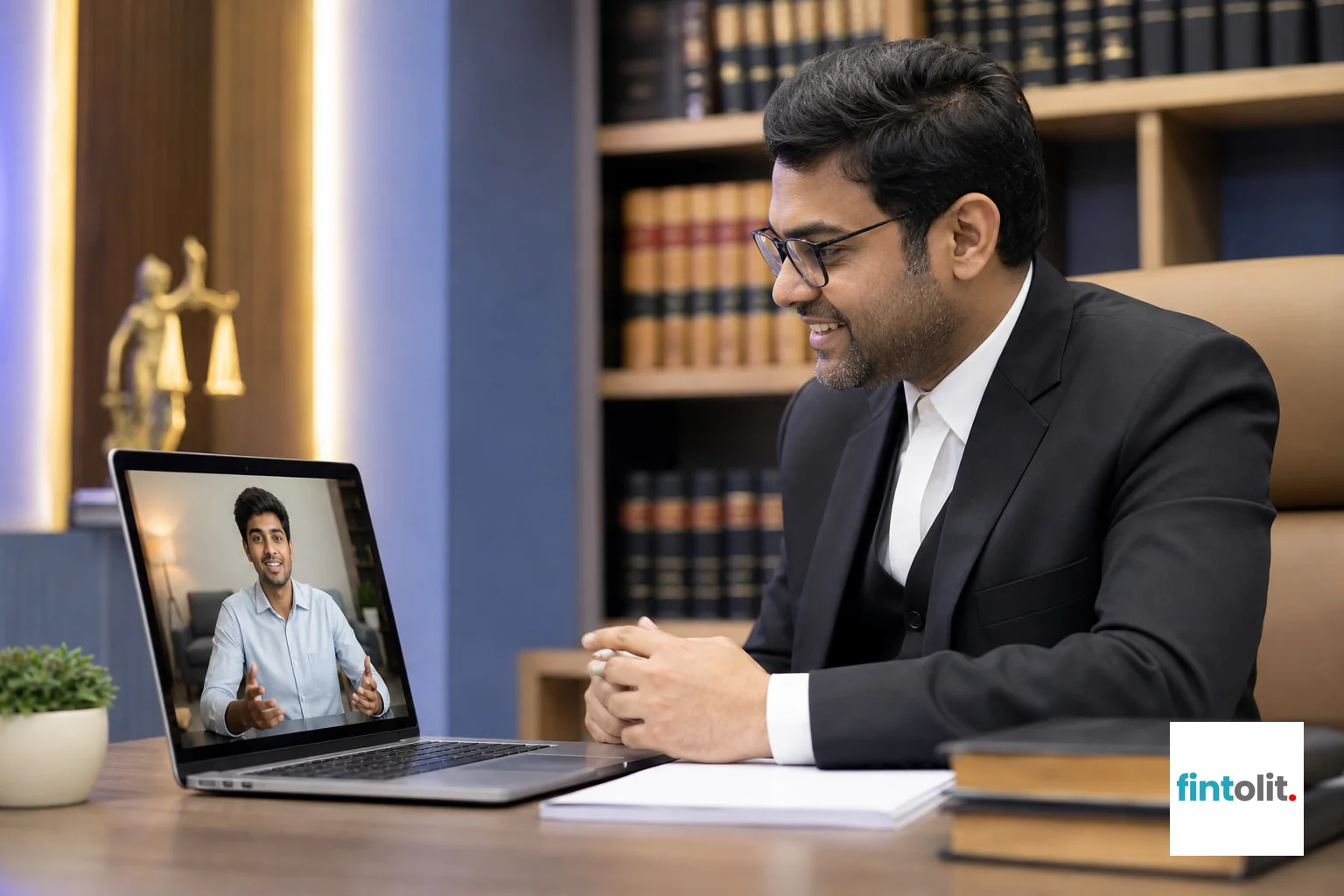
Most freelancers hesitate to act because they genuinely don't know what a lawyer will cost, or whether the cost will even make sense against the amount owed. This uncertainty is the single biggest reason unpaid invoices go unresolved. Fintolit removes that guesswork with a 60-minute consultation, at a transparent, fixed fee, with a verified lawyer who specializes in civil recovery and contract disputes.
In that session, the lawyer reviews your project trail, whatever you have, WhatsApp messages, invoices, emails, and tells you clearly where you stand and what your realistic options are. You'll know before you pay exactly which lawyer you're speaking with, including their name and experience, because Fintolit shares a verified lawyer profile before payment. There's no vague "our team will review and get back to you."
Once you decide to proceed, a dedicated case manager is assigned to your case. They track the legal notice, follow up on deadlines, and keep you updated, so you're not the one chasing a lawyer's office for status updates on top of chasing your own client. And the same lawyer stays with your case from the first consultation through to resolution, whether that's a settlement after the notice or a filed suit. Our post on why the same lawyer handles your case from consultation to closure explains why this continuity matters so much in recovery disputes specifically, where details about scope and delivery timelines can get lost in a handoff.
This service is available seven days a week, with morning and evening slots, and works both online and through an in-person "Lawyer at Home" session for freelancers across Delhi, Gurugram, and Noida who prefer to sit down face-to-face with their lawyer. There's also full transparency on cost before you commit; see our breakdown of how a one-time fee consultation with no hidden charges works if pricing clarity is your main hesitation right now.
Protecting Yourself on Future Projects
Recovering money you're owed is only half the job. The other half is making sure you don't end up in this position again. A few habits make a measurable difference:
Need a Lawyer for clarity on your case?
- Get scope and price in writing every time, even if it's just a confirmed email or message thread before work begins.
- Use milestone-based payments for larger projects, so you're never owed more than one milestone's worth of work at any point.
- Add a late payment clause, specifying interest or a fixed penalty for payments delayed beyond the agreed date.
- Keep a simple, consistent invoicing system, numbered and dated, so your paper trail is clean if you ever need it.
If you're unsure whether your current freelance agreement template actually protects you, it's worth a quick review. Our piece on employment contract review for gig workers walks through the specific clauses that matter most, and for a wider view of what documentation every working professional in India should have on file, see our complete legal fees breakdown for 2026 to plan ahead financially.
Frequently Asked Questions
Can I recover money from a client without going to court?
Yes, in most cases. A lawyer-drafted legal notice resolves a large share of freelance payment disputes without any court filing at all, because the client would rather settle than deal with the consequences of ignoring formal legal correspondence.
How long does a legal notice take to work?
Notices typically specify a 15 to 30 day window for the client to respond or pay. Many clients respond within that period once they understand the matter is being handled formally and not just through another reminder email.
What if my client is based in another state?
Jurisdiction depends on where the contract was formed, where the work was performed, or where the client resides or does business, among other factors. A lawyer can determine the correct forum to file in based on your specific facts, which matters a great deal for how smoothly your case proceeds.
Do I need a lawyer to send a legal notice?
You can technically draft one yourself, but a notice sent under a practising lawyer's letterhead carries significantly more weight and is far less likely to be ignored. Given how affordable a fixed-fee consultation is compared to what's typically owed, it's rarely worth the risk of a self-drafted notice being dismissed.
What if the client threatens to badmouth me publicly?
This is a common intimidation tactic and generally does not hold up as a real legal threat unless you've genuinely breached the agreement. A quick consultation can confirm your position and, if needed, address any defamatory statements the client makes as a separate legal matter.
A legal notice costs a fraction of what most freelancers are owed, and it often resolves the entire dispute before a single hearing is ever needed.
If a client owes you money and the follow-up messages have gone cold, don't let the invoice sit for another billing cycle. Book a consultation with a verified lawyer who handles freelance payment recovery, and walk away with a clear plan, whether that's a demand notice, a recovery suit, or a cheque bounce complaint. You'll know the lawyer's name and background before you pay a rupee, and the same lawyer stays on your case from the first call to the final resolution. Book your consultation today, or if you'd rather ask a quick question first, chat with us on WhatsApp and get pointed in the right direction before you decide anything.
You're just getting to the good part.