

If a company leaked your Aadhaar number, your bank details got exposed by a hacked app, or your personal photos ended up somewhere they shouldn't, you have a real claim. A data privacy rights breach in India can get you compensation through the Data Protection Board, a consumer forum, or a civil suit, depending on who caused the harm and how much you actually lost.
Key Takeaways
- Two laws apply: The Digital Personal Data Protection Act, 2023 covers how companies handle your data; the IT Act, 2000 covers hacking, theft, and unauthorised access.
- The Data Protection Board fines the company, not you: Penalties under the DPDP Act go to the government treasury. For personal money in your hand, you need a consumer complaint or a civil suit.
- Evidence decides everything: Screenshots, breach notifications, and bank statements matter more than how upset you are.
- A legal notice moves faster than a customer care ticket: Companies respond differently to a lawyer's letter than to an email marked "urgent" in your inbox.
- Delhi, Gurugram, and Noida cyber cells handle these cases regularly: Local jurisdiction changes where you file and how quickly it moves.
At a Glance: Data Breach Complaint Options in India
| Route | Who Handles It | Best For | Money to You Directly? |
|---|---|---|---|
| Data Protection Board of India | Central government body under DPDP Act | Companies misusing or leaking your personal data | No, penalty goes to government |
| National Cyber Crime Reporting Portal | Police cyber cells, state-wise | Hacking, identity theft, financial fraud | Possible via FIR-linked recovery |
| Consumer Forum | District/State Consumer Commission | Paid apps or services breaking their own privacy promise | Yes, compensation awarded to you |
| Civil Suit | District/High Court | Serious financial or reputational loss | Yes, damages awarded to you |
What Counts as a Data Privacy Rights Breach in India?
It's a breach when someone who was supposed to protect your personal data, be it your Aadhaar, bank details, medical records, or even your phone number, loses control of it, misuses it, or shares it without your consent. That could be a hacked shopping app, a bank employee selling your KYC data, or a fintech startup that never bothered to encrypt its database.
The DPDP Act calls the company holding your data a "data fiduciary." Under this law, they must tell you clearly what data they collect, get your consent, and report any breach to the Data Protection Board and to you. If they skip any of that, you already have grounds to complain.
The IT Act still applies separately. Section 43A makes a company liable to pay compensation if it fails to protect "sensitive personal data" and you suffer wrongful loss because of it. Section 66 covers the criminal side, hacking, identity theft, and computer-related offences that carry jail time and fines.
A real example: someone books a cab online, and weeks later gets phishing calls quoting their exact pickup address and trip history. That pattern points to a data leak from the cab company's own systems, and it's exactly the kind of case that triggers both laws at once.
Where Do You Actually Complain First?
Where you complain depends on what actually happened to you: a data misuse issue goes to the Data Protection Board, a hacking or fraud incident goes to the cyber crime portal, and a broken service promise goes to a consumer forum.
File with the Data Protection Board of India when a company mishandled your data, ignored your consent withdrawal request, or failed to report a known breach. This is an online process, no physical visit required.
Use the National Cyber Crime Reporting Portal (cybercrime.gov.in) when your accounts got hacked, money moved out without your permission, or someone is impersonating you online. Act within hours if money is involved; most banks require a police complaint before they'll even start a fraud reversal.
Need a Lawyer for clarity on your case?
Go to a consumer forum if you paid for an app, insurance policy, or subscription service that promised data security in its terms and then broke that promise. You can read more about this route in our guide on filing a consumer complaint in Delhi.
If you live in the National Capital Region, your local police cyber cell in Delhi, Gurugram, or Noida is often faster for urgent cases than waiting on the central portal alone. Filing in both places at once rarely hurts your case and often speeds it up.
What Compensation Can You Actually Claim?
You can claim direct financial compensation through a consumer complaint or civil suit, not through the Data Protection Board, since its penalties go to the government treasury rather than your pocket. The amount depends on your proven loss, not on how serious the breach felt.
Say your bank details leaked and fraudsters drained money from your account. You can claim that exact amount back, plus damages for the trouble it caused, through a civil suit or your bank's own grievance process backed by a police FIR.
Say a wellness app leaked your medical history to advertisers without consent. Here the loss is harder to price in rupees, but courts have recognised mental distress and reputational damage as compensable heads under both consumer law and tort principles.
Compensation cases move faster when you can show a number: money lost, a specific fraud transaction, or a quoted financial cost of the breach. Vague distress claims take longer and often settle for less.
Realistically, a straightforward consumer complaint with clear financial loss can resolve in a few months. A civil suit for larger damages, especially against a bigger company with lawyers on retainer, can stretch well beyond a year. That's exactly where having your own lawyer from day one changes the outcome, not just the paperwork.
How Do You Prove Your Data Was Actually Breached?
You prove a breach with a paper trail: the breach notification itself, screenshots of leaked data, bank statements showing fraud, and any written admission from the company. Courts and the Data Protection Board both need documents, not descriptions of how you felt.
Start collecting the moment you notice something wrong. Screenshot the leaked information, the app's notification (if they sent one), and any suspicious login alerts. Save the exact date and time; timelines matter in these cases.
Request a written response from the company's grievance officer. Every data fiduciary under the DPDP Act must have one. Their reply, or their silence, becomes evidence either way.
Pull your bank statements or transaction history if money moved. This links the breach to actual financial loss instead of leaving it as a data protection technicality.
A demand or legal notice drafted by a lawyer usually gets a faster, more serious response than a customer support email. Companies know a properly worded notice can become the first exhibit in a consumer or civil case, and they tend to respond to that pressure.
Data Privacy Rights Breach India: Step-by-Step Response Plan
Follow this sequence if you've just discovered a breach involving your personal data:
- Secure your accounts immediately — change passwords, enable two-factor authentication, and freeze cards if bank details were exposed.
- Document everything — screenshots, dates, notifications, and any financial loss.
- Send a legal notice to the company demanding an explanation and compensation, with a clear deadline.
- File with the right authority, the Data Protection Board, the cyber crime portal, or your local police cyber cell, based on what happened.
- Pursue your compensation claim through a consumer forum or civil suit if the company doesn't settle after the notice.
- Track the case with a dedicated point of contact instead of chasing updates yourself across multiple departments.
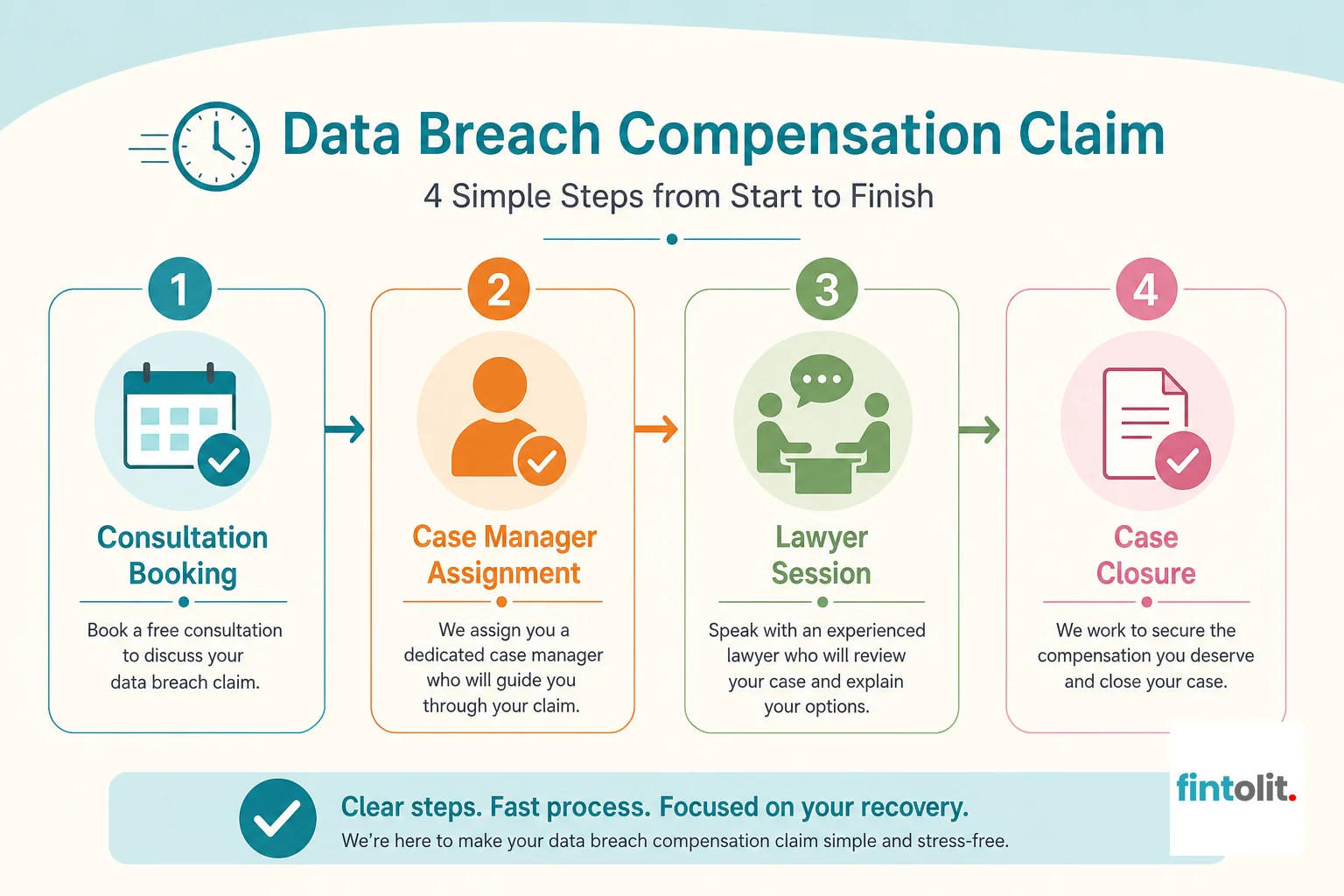
You can move through this alone, but most people get stuck at step three or four, unsure how to word the notice or which authority actually has jurisdiction. A cybercrime lawyer who builds these cases regularly knows exactly which forum moves fastest for your specific situation.
Need a Lawyer for clarity on your case?
Why Delhi NCR Residents Need Local Legal Support for Cyber Cases
Delhi, Gurugram, and Noida each run their cyber cells with different case loads and different response speeds, so the city you file in genuinely changes how fast your complaint moves. Gurugram's cyber cell, for instance, handles a heavy volume of fintech and app-related fraud given the number of startups headquartered there.
Noida cases under the Uttar Pradesh framework sometimes follow a slightly different procedural track than a complaint filed in Delhi. If you're unsure which city's process applies to your case, that's a question worth asking before you file, not after.
Fintolit connects you with verified lawyers experienced in cyber and data privacy cases across Delhi, Gurugram, and Noida, whether you want an online consultation from wherever you are or a Lawyer at Home session so you can go through your documents in person, without visiting an office.
FAQs
What is the lawyer consultation fee in India for a data breach case?
Fees vary by lawyer and case complexity, but a fixed, upfront consultation fee is now common with platforms like Fintolit, so you know the exact cost before you commit. Ask about current consultation pricing directly rather than relying on a generic hourly estimate.
Is data breach a criminal offence in India?
Yes, in many cases. Hacking, identity theft, and unauthorised access under the IT Act carry criminal penalties including jail time, while data mishandling under the DPDP Act is mainly a civil and regulatory matter with financial penalties on the company.
Can I sue a company for leaking my data?
Yes, you can file a civil suit or a consumer complaint if you suffered actual loss, financial, reputational, or otherwise, because a company failed to protect your personal data. You'll need to show the loss was a direct result of their negligence.
How long does a Data Protection Board complaint take?
The Board is still building its case backlog since it's a relatively new body under the 2023 Act, so timelines vary. Filing a parallel consumer complaint or sending a legal notice often gets you a faster practical response than waiting on the Board alone.
A data breach rarely fixes itself, and the company that lost your information usually won't volunteer compensation without pressure. If your personal data has been leaked, hacked, or misused anywhere in Delhi NCR, book a consultation with a verified cyber law specialist who can review your evidence, draft the right notice, and tell you exactly which forum gives you the best shot at compensation. You can also chat with us on WhatsApp if you'd rather explain your situation before booking, and a dedicated case manager will stay on your case from the first call to its resolution.
You're just getting to the good part.