A civil dispute lawyer consultation online lets you describe a neighbor conflict, contract breach, or money recovery issue to a verified lawyer over video call, then walk away with a clear resolution plan, usually within a day or two, and often without ever setting foot in a courtroom. For most everyday disputes in Delhi NCR, that plan involves a negotiation, a legal notice, or a settlement rather than years of litigation.
Key Takeaways
- Most civil disputes settle before trial: Neighbor conflicts, vendor breaches, and deposit disputes are commonly resolved through a legal notice or negotiated settlement, not a multi-year civil suit.
- A 60-minute online session is usually enough to get direction: A single consultation with a verified civil law specialist typically clarifies whether you need a notice, mediation, or a formal filing.
- Verification before payment changes the outcome: Knowing your lawyer's name, bar registration, and experience upfront avoids the common trap of paying for advice from someone you can't verify.
- The Limitation Act, 1963 punishes delay: Waiting too long to act on a civil claim can permanently bar you from recovering money or property, regardless of how strong your case is.
- Fixed, upfront fees prevent the biggest complaint about lawyers: Per-call billing and drafting add-ons are the most common source of unexpected legal costs in India.
At a Glance: Civil Dispute Consultation Options
| Option | Typical Cost Structure | Time to First Session | Lawyer Verification | Follow-Through |
|---|---|---|---|---|
| Online lawyer consultation (Fintolit model) | Fixed upfront fee, no hidden add-ons | Same day to next day, 7 days a week | Profile shared before payment, 10+ years experience | Same lawyer plus dedicated case manager to closure |
| In-person "Lawyer at Home" | Fixed upfront fee, slightly higher for travel | 1-2 days, subject to location | Same verified lawyer network | Same lawyer, in-person document handling |
| Free legal aid clinics | No fee, income criteria apply | Days to weeks, subject to availability | Varies by legal aid society | Limited; often one-time advice |
| Lawyer directories / listings | Negotiated per call, often unclear until after booking | Immediate booking, but variable quality | Self-reported, rarely verified | No case manager; lawyer may change |
| Traditional law firm office visit | Consultation fee plus retainer, often undisclosed initially | Days, appointment-dependent | Reputation-based, not always disclosed upfront | Depends on associate assigned |
What Counts as a Civil Dispute (And Why Most Never Need a Courtroom)
A civil dispute covers a wide range of everyday conflicts: a neighbor building a wall two feet onto your side, a vendor who took payment and never delivered, a business partner who stopped honoring the partnership terms, or a tenant who refuses to vacate after the lease ends. None of these start as criminal matters. They start as disagreements over money, property, or an obligation one side didn't keep.
Here's what surprises most people: going straight to civil court is rarely the fastest or cheapest way to resolve any of this. Civil suits in Indian district courts can run for years given case backlogs. A large share of civil disputes are actually resolved earlier, through a firm legal notice that forces the other side to respond, a negotiated settlement, or a reference to mediation under Section 89 of the Code of Civil Procedure, 1908. The court filing becomes the last resort, not the first move.
That's exactly why an online consultation is often the smartest starting point. A lawyer can look at your situation, tell you honestly whether it needs a notice, a negotiation, or a filed suit, and save you months of guessing. If you're unclear on what actually qualifies as a legal matter versus something you can settle informally, our guide on how to choose the right lawyer for your case in India breaks that down further.
1. Describe Your Dispute in Plain Language
You don't need legal vocabulary to start. The first step in an online civil dispute lawyer consultation is simply explaining what happened, in your own words. Was there a written agreement? Did money change hands? Has the other party responded to your messages or gone silent?
Need a Lawyer for clarity on your case?
Before your session, gather what you already have: dates of key events, any WhatsApp or email exchanges, the original contract or agreement if one exists, and a rough figure of what's at stake, whether that's a security deposit, an unpaid invoice, or the value of disputed property. None of this needs to be organized perfectly. A dedicated case manager reviews what you share and flags anything missing before the lawyer call, so you're not scrambling mid-conversation.
This intake step exists precisely because most people freeze up trying to translate a personal problem into "legal" language. You don't have to. Say it the way you'd tell a friend, and let the specialist sort out the legal framing.
2. Get Matched With a Verified Civil Law Specialist
This is the step where most online legal platforms in India lose people's trust, and for good reason. Plenty of directory-style services connect you to whoever picks up first, with no way to check their background before you pay. You end up on a call with a stranger, unsure if they've handled a single civil recovery case before.
A better model shares the lawyer's name, years of practice, and specialization with you before you pay anything. For civil disputes specifically, that means confirming the lawyer has actual experience with property boundary conflicts, contract enforcement, or recovery suits, not a generalist who happens to be available. Fintolit's civil law specialists carry 10+ years of courtroom and negotiation experience, and their profile is shared upfront so you know exactly who you're speaking to.
This single detail, verification before payment, is why we wrote a full breakdown on why a verified lawyer profile before payment builds trust. If you've been burned by a vague "legal consultant" before, that piece explains exactly what to check going forward.
3. Hold the Online Consultation and Get a Resolution Plan
The consultation itself typically runs 60 minutes. The lawyer asks clarifying questions, reviews any documents you've shared, and walks you through your realistic options. For a civil dispute, that usually means one of the following paths:
- Direct negotiation: The lawyer drafts talking points or handles outreach to the other party informally, often the fastest resolution for neighbor or vendor disputes.
- A formal legal notice: A written notice on letterhead often prompts a response that months of personal calls and messages never got. It also creates a paper trail if the matter escalates.
- Mediation or conciliation: For disputes where both sides want to avoid a permanent falling-out, court-annexed mediation or a private settlement conference can resolve things in weeks.
- Filing a civil suit: Reserved for cases where the other party is unresponsive, the amount is significant, or property rights are contested and need a court order.
You leave the call with a written resolution plan, not vague reassurance. After that, a dedicated case manager tracks progress, chases the next steps, and keeps you updated so you're not the one following up every few days. The same lawyer who took your first call stays with the case through closure, whether that means a signed settlement or a filed suit. We've covered why that continuity matters in detail in why get the same lawyer from consultation to case closure.
Online Consultation vs In-Person vs Free Legal Aid vs Lawyer Directories
Online consultations work well for the majority of civil disputes because most of the early work, understanding your options and mapping a strategy, doesn't require anyone to be in the same room. But it's worth knowing when the alternatives make more sense.
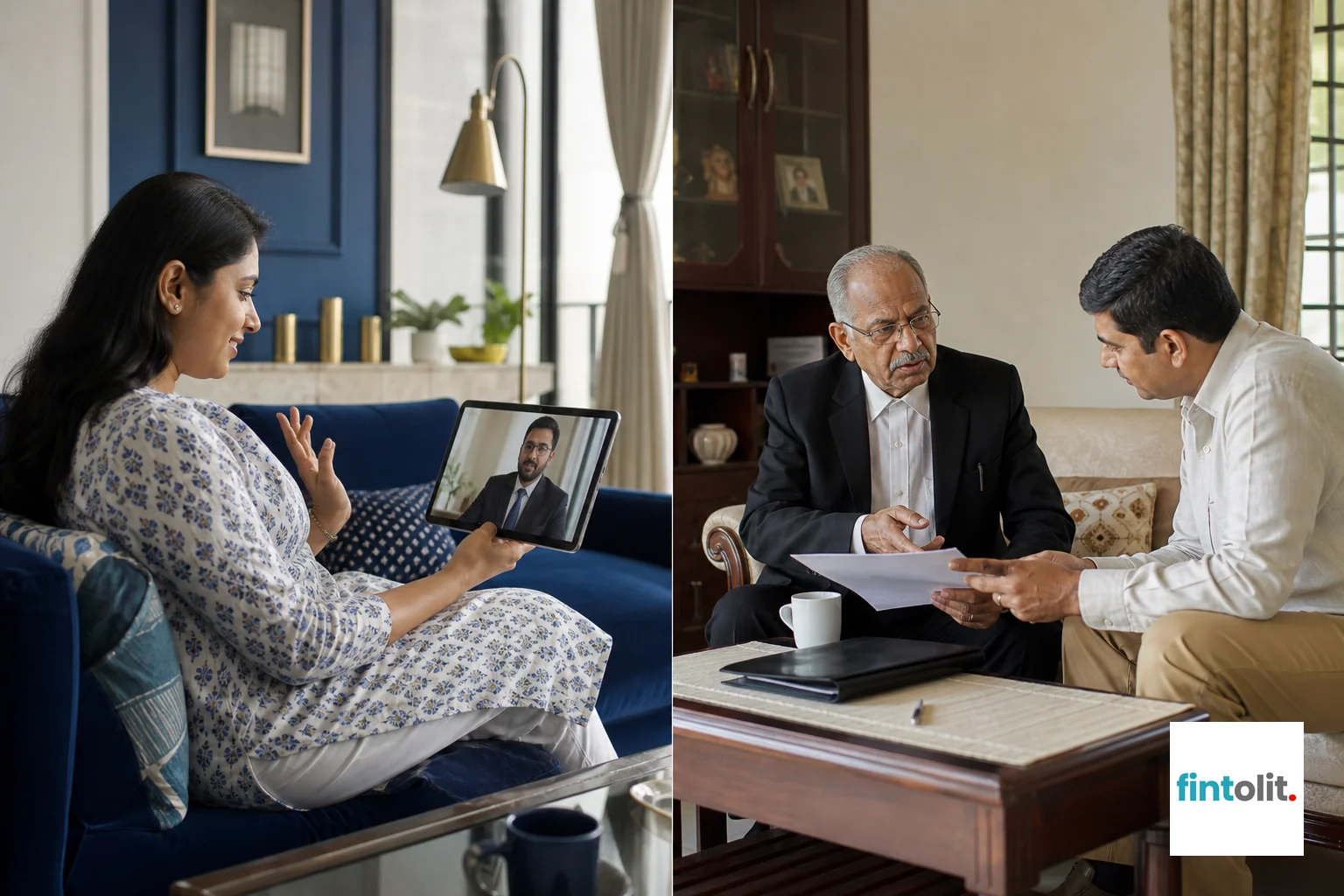
An in-person "Lawyer at Home" session is worth considering when your dispute involves a large stack of physical documents, like old property deeds or years of correspondence that are easier to sort through together, or when the matter is sensitive enough that you'd rather not discuss it over video. Fintolit offers this as an alternative format across Delhi, Gurugram, and Noida, using the same verified lawyer network. Our guide on how Lawyer at Home service works in India covers exactly what to expect.
Need a Lawyer for clarity on your case?
Free legal aid, available through District Legal Services Authorities under the Legal Services Authorities Act, 1987, is genuinely useful if you meet the income eligibility criteria and your case is straightforward. But capacity is limited, and case continuity isn't guaranteed. Our comparison of free legal aid vs paid legal help in Delhi goes deeper into where the line sits.
Lawyer directories sit somewhere in between. They're fast to book but leave the verification and fee negotiation entirely on you. If you've compared multiple online legal platforms already and found the pricing structures confusing, India's online legal platforms compared lays out the differences plainly.
Common Civil Disputes Resolved Without Going to Court
Here's where an online civil dispute lawyer consultation actually earns its keep, in the disputes that show up constantly across Delhi NCR households and small businesses:
- Neighbor boundary and noise disputes: A shared wall that's shifted, a fence built a few feet too far, or ongoing noise complaints. A firm notice or a mediated conversation resolves most of these without a property suit.
- Breach of contract with a freelancer or vendor: A contractor who took an advance and stopped responding, or a vendor who delivered defective goods. These usually get resolved through a demand notice and negotiated refund or completion timeline.
- Money recovery from a defaulter: Someone who borrowed money on a promissory note or informal agreement and stopped repaying. A recovery notice, followed by a summary suit if needed, is the standard path.
- Landlord-tenant security deposit disputes: One of the most common complaints in Delhi NCR rental markets, usually resolved through a notice citing the rent agreement terms.
- Partnership disagreements: When a business partner stops honoring the partnership deed, whether on profit-sharing or decision rights, a lawyer can clarify what the deed actually enforces before the relationship deteriorates further.
If you're dealing specifically with an online seller refusing a refund, that falls under consumer law rather than general civil dispute process, and our piece on how a consumer complaint against an online seller actually works walks through that separate route.
Hidden Costs to Watch For Before You Hire
The most common complaint about hiring legal help in India isn't the quality of advice, it's the surprise costs that show up after the first meeting. Per-call billing that resets every time you have a question. Drafting fees quoted separately after the consultation is done. Court filing charges that were never mentioned upfront.
A fixed, upfront fee model avoids this entirely. You know the consultation cost before you pay, and if drafting or a legal notice is needed next, that's quoted clearly rather than added as a surprise. We've laid out exactly how this works in one time fee legal consultation, no hidden charges: how it works, which is worth reading before you commit to any legal service, online or offline.
What Happens If You Ignore the Dispute Instead
Delay is the single biggest risk in a civil dispute. The Limitation Act, 1963 sets strict deadlines, generally three years from the date the cause of action arose, for filing most civil suits, including money recovery and contract claims. Miss that window, and even a strong case can get dismissed on limitation grounds alone, regardless of the facts.
Ignoring the dispute also tends to make it worse in practical terms. Interest accrues on unpaid amounts, disputed property can change hands or get further complicated by new constructions, and the other party's position hardens the longer nothing happens. If you've already received a legal notice related to a civil matter and aren't sure how to respond, read legal notice reply: how to respond without losing ground before the response deadline passes.
Need a Lawyer for clarity on your case?
FAQs: Civil Dispute Consultation Online
Is an online consultation legally valid for civil matters?
Yes. An online consultation doesn't file anything with a court by itself, it's advice and strategy, the same as an in-person meeting. Any notice, agreement, or plaint the lawyer drafts afterward carries the same legal weight whether the initial conversation happened over video or across a desk.
Can a civil dispute be fully resolved online without visiting court?
Many are. Negotiated settlements, legal notices, and even mediation sessions can happen entirely online or over phone and email exchanges. Court visits become necessary only if the matter proceeds to a filed suit that requires hearings, though even then, your lawyer typically handles court appearances while you stay updated remotely.
How fast can I get a consultation in Delhi NCR?
Fintolit offers consultations 7 days a week with morning and evening slots, so most clients across Delhi, Gurugram, and Noida can book within a day. That speed matters in civil disputes, where limitation periods and prompt legal notices can materially affect the outcome.
What if my case needs to go to civil court eventually?
The same lawyer who handled your first consultation continues with the case, so there's no need to re-explain your situation to someone new. Your dedicated case manager keeps track of filings, hearing dates, and document requirements throughout, so the transition from consultation to litigation feels like a continuation, not a restart.
What legal documents should I have ready before my consultation?
Bring whatever exists: the original contract or rent agreement, payment receipts, WhatsApp or email records of the dispute, and any prior notices exchanged. If you're unsure what counts as a necessary legal document for your situation more broadly, this is worth reviewing alongside your specific dispute.
A neighbor dispute that's dragged on for months, an unpaid invoice you've chased for weeks, or a security deposit your landlord keeps stalling on, none of these need to sit unresolved while you figure out who to call. Book your consultation with a verified civil law specialist and walk away with a clear resolution plan instead of another round of guessing. If you'd rather talk it through first, you can chat with us on WhatsApp and describe your situation before you commit to anything. Either way, the sooner you act on a civil dispute, the more options stay open to you, so book now and get a lawyer who stays with your case from the first call to its resolution.
You're just getting to the good part.