

If you think an arrest might be coming, you don't have to wait for it. Anticipatory bail lets a person apply to a Sessions Court or the Punjab & Haryana High Court for protection from arrest before it happens, while regular bail applies after someone is already arrested or in custody. Picking the wrong one, or filing in the wrong court, wastes time you may not have.
Key Takeaways
- Different timing: Anticipatory bail is a pre-arrest shield; regular bail is sought after arrest or during trial.
- Different courts: In Gurgaon, anticipatory bail pleas usually go to the Sessions Court first, then the Punjab & Haryana High Court if refused.
- Grounds matter more than paperwork: Courts look at flight risk, tampering risk, and the seriousness of the allegation, not just your reputation.
- Local experience counts: Gurgaon's Sessions Court and the Chandigarh-based High Court bench each have their own practical rhythm; a lawyer who knows both moves faster.
- Fixed, upfront fees exist: Platforms like Fintolit connect you with verified lawyers before you pay anything, so you're not negotiating blind.
At a Glance: Anticipatory Bail vs Regular Bail
| Factor | Anticipatory Bail | Regular Bail |
|---|---|---|
| When filed | Before arrest, on apprehension of one | After arrest, or while in judicial custody |
| Governing provision | Section 482, BNSS (earlier Section 438, CrPC) | Sections 478-484, BNSS (earlier 437/439, CrPC) |
| Usual first court in Gurgaon | Sessions Court, Gurugram | Magistrate or Sessions Court depending on offence |
| Appeal court | Punjab & Haryana High Court | Punjab & Haryana High Court |
| What the court checks | Nature of allegation, past conduct, chance of misuse of arrest power | Flight risk, evidence tampering, seriousness of charge |
| Typical timeline | Days to a few weeks, depending on urgency | Can range from same-day (bailable offences) to months |
| Common triggers | Matrimonial disputes, cheque bounce notices, business disputes, false implication fears | Post-FIR arrest, remand extension, chargesheet stage |
[[ASSET:none]]
What Is Anticipatory Bail, Really?
Anticipatory bail is protection you ask for before the police can arrest you. If a court grants it, you can't be taken into custody on that specific FIR without being given the chance to seek bail on the spot.
It exists because arrest is often used as a pressure tactic, not just a legal necessity. Business partners threatening an FIR after a deal turns sour, or a spouse naming a relative in a matrimonial complaint, are two situations where this comes up constantly in Gurgaon.
The Supreme Court's ruling in Gurbaksh Singh Sibbia settled the core question decades ago: courts have wide discretion to grant this protection, and it shouldn't be treated as a rare exception. That holding still shapes how Haryana courts decide these pleas today.
You don't need to have committed nothing wrong to qualify. You need a genuine, specific fear of arrest, usually because someone has already threatened to file a complaint or an FIR names you.
What Is Regular Bail?
Regular bail comes into play once a person is already arrested, or is in judicial custody awaiting trial. There's no "before the fact" element here, the arrest has happened, and the question is whether the person should be released while the case moves through court.
For minor, bailable offences, a police officer can grant bail at the station itself. For non-bailable offences, the case goes before a Magistrate or Sessions judge, who weighs the risk of the accused fleeing, influencing witnesses, or repeating the offence.
This is a slower, higher-stakes process than most people expect. Custody time matters, evidence collection matters, and every extra day without bail changes the pressure on the accused's family and job.
Anticipatory Bail vs Regular Bail: Where They Actually Differ
People often assume these are two names for the same thing filed at different times. They're not quite that simple.
Need a Lawyer for clarity on your case?
Anticipatory bail only works before arrest, and only for the specific FIR or apprehended complaint named in the application. Once arrested on that matter, the protection has already served its purpose, and any further release requires regular bail.
Regular bail applications need to address the police's actual conduct during investigation: was there a custodial interrogation, has a chargesheet been filed, is there a risk the accused will run. Anticipatory bail pleas argue something more forward-looking: why the arrest itself shouldn't happen at all.
The courts hearing them can overlap, but the arguments a lawyer builds are completely different. A lawyer skilled at regular bail hearings isn't automatically good at anticipatory bail strategy, and vice versa.
How the Gurgaon Courts Handle Bail Matters
Gurgaon sits in the jurisdiction of the District and Sessions Court, Gurugram, with appeals and many original anticipatory bail pleas going up to the Punjab & Haryana High Court in Chandigarh.
Local practice matters here. Gurgaon's Sessions Court handles a heavy volume of matrimonial, cheque bounce, and cyber fraud matters given the city's corporate population, and judges here have specific expectations about how anticipatory bail affidavits should be worded.
A lawyer who regularly appears before this bench knows which judges want detailed FIR analysis upfront and which move faster with a tighter, focused plea. That local familiarity often decides how quickly a hearing gets listed.
When Should You Apply for Anticipatory Bail?
Apply for anticipatory bail as soon as you have a real reason to believe an FIR is coming, not after it's already filed. Common triggers include a legal notice threatening police action, a business dispute escalating, or a matrimonial complaint being drafted against you or your family.
Waiting too long removes the option entirely. Once you're arrested, the anticipatory route closes, and you're stuck fighting for regular bail from inside custody, which is a slower, harder position.
How the Bail Process Actually Moves
Filing a bail plea isn't a single step. It starts with reviewing the exact allegation, checking which section of the law applies, and deciding which court has jurisdiction over your specific facts.

Once that groundwork is done, a lawyer drafts the application with supporting affidavits, files it, and appears for the hearing where the prosecution and the accused's side both argue. If the plea is denied at the Sessions Court level, the next step is moving to the Punjab & Haryana High Court.
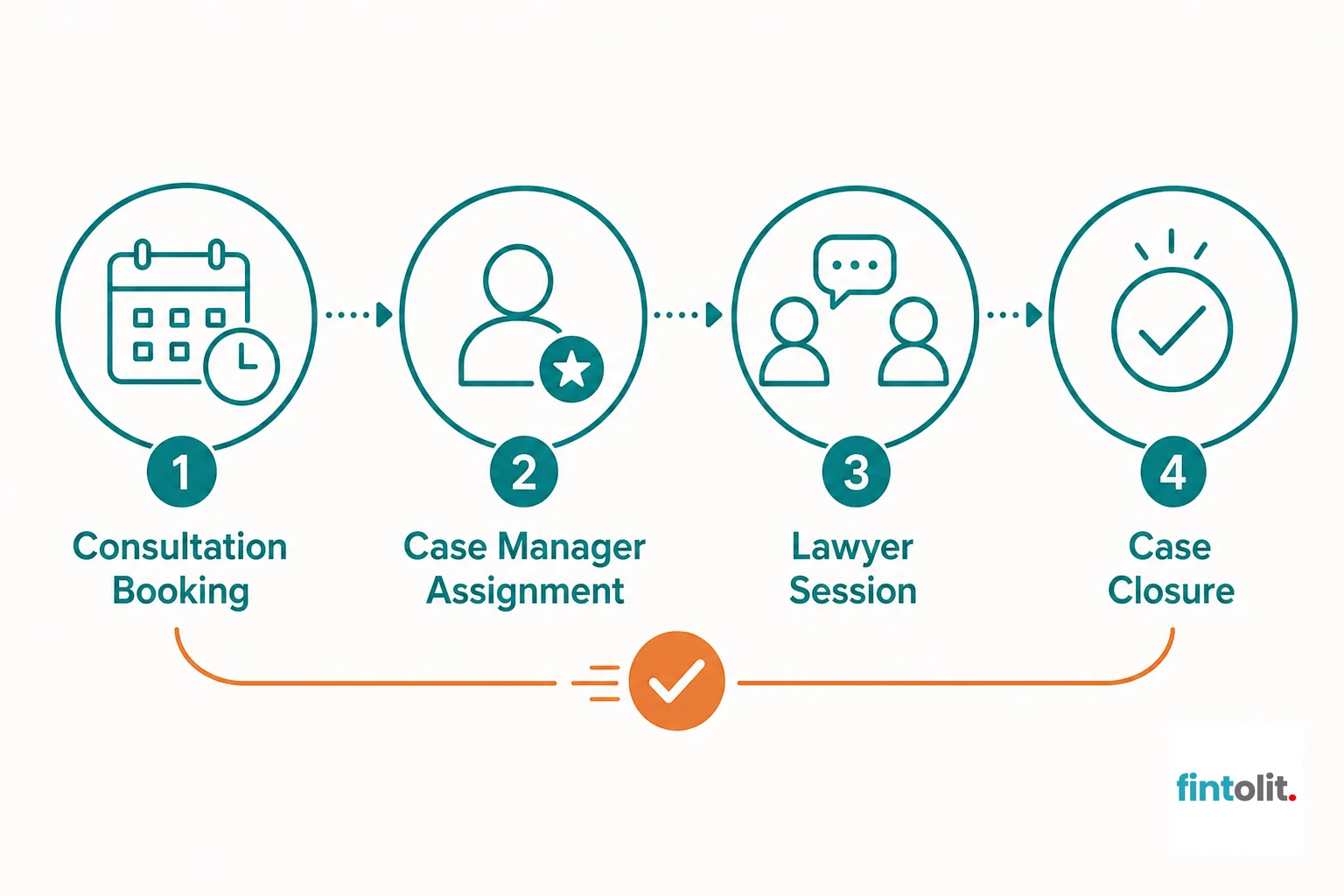
Fintolit's process mirrors that logic without the guesswork. You describe your situation, get matched with a lawyer whose background fits your specific offence and court, and keep the same lawyer from the first consultation to the final hearing, with a dedicated case manager tracking every update along the way.
What to Look for in a Bail Lawyer in Gurgaon
Not every criminal lawyer handles bail matters the same way, so check a few things before you commit.

- Case-specific experience: Ask how many anticipatory bail or regular bail matters they've argued in the last two years, and in what kind of cases.
- Court exposure: A lawyer who has actually appeared before the Punjab & Haryana High Court moves faster than one who's only worked lower courts.
- Fee transparency: Ask for a fixed number upfront, not a vague "we'll discuss as we go" answer.
- A verified profile before you pay: You should know the lawyer's name and background before any money changes hands, not after.
- Continuity: Bail cases often run alongside a longer trial. Confirm the same lawyer stays on, rather than handing you off midway.
If you're unsure whether your matter needs a lawyer or just a quick consultation, our guide on choosing between a legal consultant and a lawyer breaks down that distinction plainly.
Need a Lawyer for clarity on your case?
How Fintolit Helps You Find the Right Lawyer
Fintolit removes the part everyone dreads most: not knowing who to trust. Instead of relying on a relative's recommendation or a random online search, you describe your case and get matched with a lawyer whose background actually fits it, including High Court and Supreme Court practitioners with over ten years of experience.
Every profile is shared with you before you pay a rupee. A dedicated case manager keeps you updated at every stage, so you're not chasing your own lawyer for news. And the same lawyer stays on your case from the first consultation through to closure, no unexplained handoffs midway through a bail hearing.
This matters more in criminal matters than almost anywhere else. If your case also touches property, employment, or a workplace complaint alongside the criminal angle, Fintolit's breakdown of legal fees in India can help you plan the wider cost picture, and our page on online legal consultations explains how remote sessions work if you can't get to Gurgaon in person.
Frequently Asked Questions
Can anticipatory bail be denied?
Yes, courts can and do deny anticipatory bail, usually when the offence is very serious, there's a real risk of the accused fleeing or tampering with evidence, or the FIR involves grave bodily harm. A denial at the Sessions Court level can still be challenged at the Punjab & Haryana High Court.
How long does an anticipatory bail application take in Gurgaon?
Straightforward cases can get a hearing within days if the plea is filed early and the paperwork is clean. Complex matters with multiple accused or serious charges can take a few weeks, especially if the matter moves to the High Court after a Sessions Court refusal.
Is anticipatory bail valid until the trial ends?
Generally yes, once granted, anticipatory bail protection continues through the investigation and trial unless a court specifically cancels it, though conditions attached to it (like reporting to police or surrendering your passport) must still be followed.
What's the cost difference between anticipatory and regular bail?
Costs vary by case complexity, number of hearings, and which court is involved rather than by the type of bail itself. Ask any lawyer for a fixed quote upfront rather than assuming one type is automatically cheaper. You can also read our guide on why legal costs differ in India for more context.
Whether you're staring at a legal notice, hearing rumors of an FIR, or already dealing with an arrest in the family, the clock works against you the longer you wait. Book a consultation with a verified Gurgaon bail lawyer today, get a case manager who tracks every hearing for you, and know exactly who's handling your matter before you pay anything. You can also chat with us on WhatsApp if you'd rather explain your situation directly, or simply book now to get matched with the right lawyer for your specific bail matter.
You're just getting to the good part.