

A cousin quietly sells the family plot in Gurugram while you're in Chicago, or an uncle back home gets a power of attorney signed with your "consent" that you never gave. If you're facing NRI property fraud by relatives, the first move is not a phone call to that relative. It's collecting certified copies of the deed, the encumbrance certificate, and mutation records before you say a word to anyone.
Key Takeaways
- Document first, confront never: pull certified copies of the disputed deed from the sub-registrar before you contact the relative involved.
- Encumbrance certificate is your map: a 30-year encumbrance certificate shows every transaction recorded against the property, including the fraudulent one.
- A legal notice creates a paper trail: it rarely stops a sale by itself, but it puts the buyer and registrar on record that you're contesting the title.
- Injunction freezes the property: a court order stopping further sale, mortgage or construction buys time while the main case runs.
- Civil and criminal routes can run together: a suit for cancellation and possession, alongside an FIR for forgery or cheating, cover both the property and the punishment.
The Problem: How NRI Property Fraud Unfolds, and the Solution Roadmap at a Glance
| Step | What It Does | Typical Timeframe | Who You Need |
|---|---|---|---|
| Certified copy of deed | Confirms exactly what was registered and by whom | Same week, via registry portal or in-person | Local counsel or a document runner |
| Encumbrance certificate (30 years) | Shows the full chain of ownership and any prior disputes | 3-7 working days | Sub-registrar office, or lawyer on your behalf |
| Legal notice | Creates a dated record; alerts buyer and registrar | 1-2 weeks to draft and serve | Property lawyer |
| Temporary injunction | Stops further sale, mortgage or construction | 2-6 weeks depending on court backlog | Civil court lawyer |
| Civil suit for cancellation | Voids the fraudulent deed and can recover possession | Months to a few years | Property litigation lawyer |
| FIR / criminal complaint | Pursues forgery, cheating or impersonation charges | Ongoing alongside civil suit | Local police station + criminal lawyer |
The Problem: How Do Relatives Usually Pull Off Property Fraud on NRIs?
Most cases follow one of four patterns: a forged power of attorney, someone impersonating you at the sub-registrar, a fake "no objection" letter presented as your consent, or an undervalued insider sale meant to look routine. Distance is the actual weapon, not cleverness.
You're not physically present to sign anything, check anything, or show up when a document gets registered. A relative who has access to your Aadhaar copy, an old signed letter, or simply your trust, can do a surprising amount with a registrar clerk who isn't asking hard questions. That gap between what you think is happening in India and what's actually being filed at the registrar's office is where almost every one of these frauds lives.
The Solution, Step 1: Stop Talking, Start Documenting
The instinct is to call the relative and demand an explanation. Don't. The moment they know you're aware, documents can get backdated, witnesses can get coached, and any half-finished transaction gets rushed to completion.
Instead, write down every date you remember: when you last visited, when you last signed anything property-related, when you first heard something was off. Save every WhatsApp message, email, or forwarded photo that hints at a pending or completed sale. None of this replaces a certified document, but it gives your lawyer a timeline to work from on day one.
The Solution, Step 2: Pull the Paper Trail Before You Do Anything Else
Start with a certified copy of the deed in question, obtained directly from the sub-registrar's office where the property is located, not a photocopy someone emails you. Most states now run online registry search portals where you can request this using the property's khasra number or registration details.
Need a Lawyer for clarity on your case?
Next, get an encumbrance certificate covering the last 30 years. This single document lists every sale, mortgage, gift, or lien registered against the property, in order. If a fraudulent transaction has actually been recorded, it will show up here with a date and registration number you can't argue with.
Round it off with mutation records from the local municipal office and recent property tax receipts. These show who's been paying tax and whose name sits in the revenue records, which matters just as much as the registered deed itself.

Once you have these, a lawyer can tell within a single consultation whether you're looking at forgery, an unauthorised sale, or a paperwork dispute that isn't fraud at all. That distinction changes everything about your next step. Our guide on verifying property documents from abroad walks through the specific portals and certificate types state by state.
The Problem: Is a Legal Notice Enough to Stop a Fraudulent Sale?
No, a legal notice alone won't freeze a sale in progress. What it does is create a formal, dated record that you're contesting the transaction, which pressures a buyer to pause and gives you standing when you go to court next.
Think of it as the first shot across the bow. A serious buyer's own lawyer, on seeing a legal notice referencing a disputed title, will usually advise their client to hold off until the matter is resolved. Registrars, too, take note when a notice on record contradicts what's being presented for registration.
The Solution, Step 3: Ask for an Injunction Before the Case Drags On
A legal notice buys attention. An injunction buys time. Filing for a temporary injunction alongside your main civil suit is what actually stops the relative or a buyer from selling, mortgaging, or building on the disputed property while the case works through court.
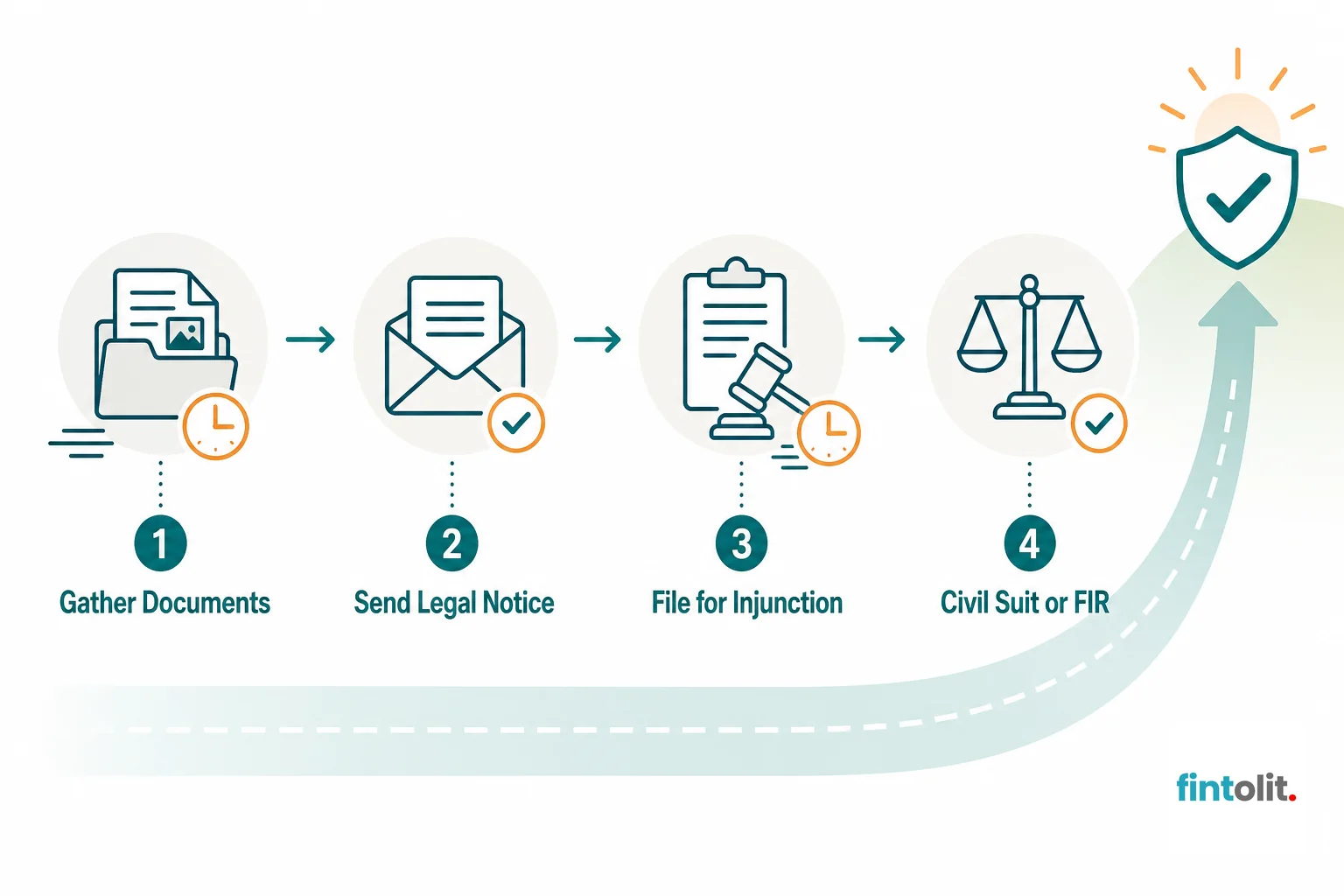
It moves fast when the documentation is solid. Courts are far more willing to grant an interim order in the first hearing if you walk in with the certified deed copy, the encumbrance certificate, and a clear timeline already in hand, rather than asking for time to "get papers together." That's the entire reason step 2 comes before step 3, not after.
The Solution, Step 4: Decide Between a Civil Suit, a Criminal Complaint, or Both
A civil suit asks the court to declare the fraudulent document void, cancel it, and hand back possession where relevant. It's the route that actually restores your ownership. A criminal complaint, filed as an FIR for forgery, cheating, impersonation, or conspiracy, targets the people responsible and has real consequences for them beyond the property itself.
These aren't either-or. Most NRI property fraud cases run both simultaneously: the civil suit rebuilds your title, the criminal complaint puts pressure on the relative to settle or reverse the transaction rather than fight a years-long case with a police file attached. If your situation involves a specific power of attorney that was misused, our piece on POA mistakes that void the document covers how a badly drafted or forged POA gets challenged.
The Solution, Step 5: Choosing a Lawyer You Can Brief From Another Country
You're not going to fly to Delhi for every hearing, so the lawyer you pick has to work the way you actually need to work: video calls at your time zone, a case manager who tells you what happened after each hearing without you having to chase them, and one lawyer who stays on the file from the first consultation to the last hearing.

Fintolit shares a verified lawyer's name and background before you pay anything, so you're not gambling on a stranger. A dedicated case manager sits alongside your lawyer and keeps you updated proactively, which matters when you're eight time zones away and can't just walk into an office to ask what's going on. Read more on why the same lawyer from consultation to closure actually changes outcomes in long-running property matters.
Need a Lawyer for clarity on your case?
For document verification specifically, a "Lawyer at Home" visit means someone physically checks the original deed, mutation entry, or registrar record on your behalf, rather than relying on scans a relative sends you. That single step catches most forgeries before you've filed anything.
The Problem: What if the Property Is in Delhi, Noida or Gurugram?
Registrar procedures and land record portals differ by state, and Delhi NCR spans three of them: Delhi, Uttar Pradesh (Noida), and Haryana (Gurugram). A lawyer who knows the specific sub-registrar office handling your property gets certified copies faster and knows which local officials to push when a request stalls.
If your dispute sits in Delhi, our complete guide to property lawyers in Delhi covers how local counsel typically structures these cases. For Noida properties, see our step-by-step guide to property lawyers in Noida, which walks through what a first consultation actually covers.
FAQ: Problems and Solutions NRIs Ask About Most
Problem: Can I file a case from abroad without visiting India?
Solution: Yes, you can file both the civil suit and the criminal complaint through a power of attorney given to your lawyer, and attend most hearings via video conferencing where the court permits it. You typically only need to travel for specific evidence stages, if at all.
Problem: How long does cancelling a fraudulent sale deed take?
Solution: It depends heavily on the court's backlog and how strong your documentary evidence is going in. A straightforward case with a clean encumbrance certificate and a solid injunction can move faster than a contested one where the other side keeps filing objections, so timelines genuinely vary and any lawyer promising a fixed date upfront should be questioned.
Problem: What happens if the relative already sold to a third party?
Solution: You can still sue to cancel the sale and recover the property, but the case gets more complex because the buyer may claim they purchased in good faith. This is exactly the scenario where an injunction filed early would have prevented the resale, which is why speed in the first few weeks matters so much.
Property fraud by a relative is disorienting precisely because it comes from someone you trusted, and untangling it from another country adds a layer most people aren't prepared for. You don't have to manage the certified copies, the notice, and the court filings on your own guesswork. Book a consultation with a verified Fintolit property lawyer who can review your documents and map out the exact next step for your specific case, or chat with us on WhatsApp if you'd rather talk through what's happened before committing to anything.
Recommended Resources
You're just getting to the good part.