
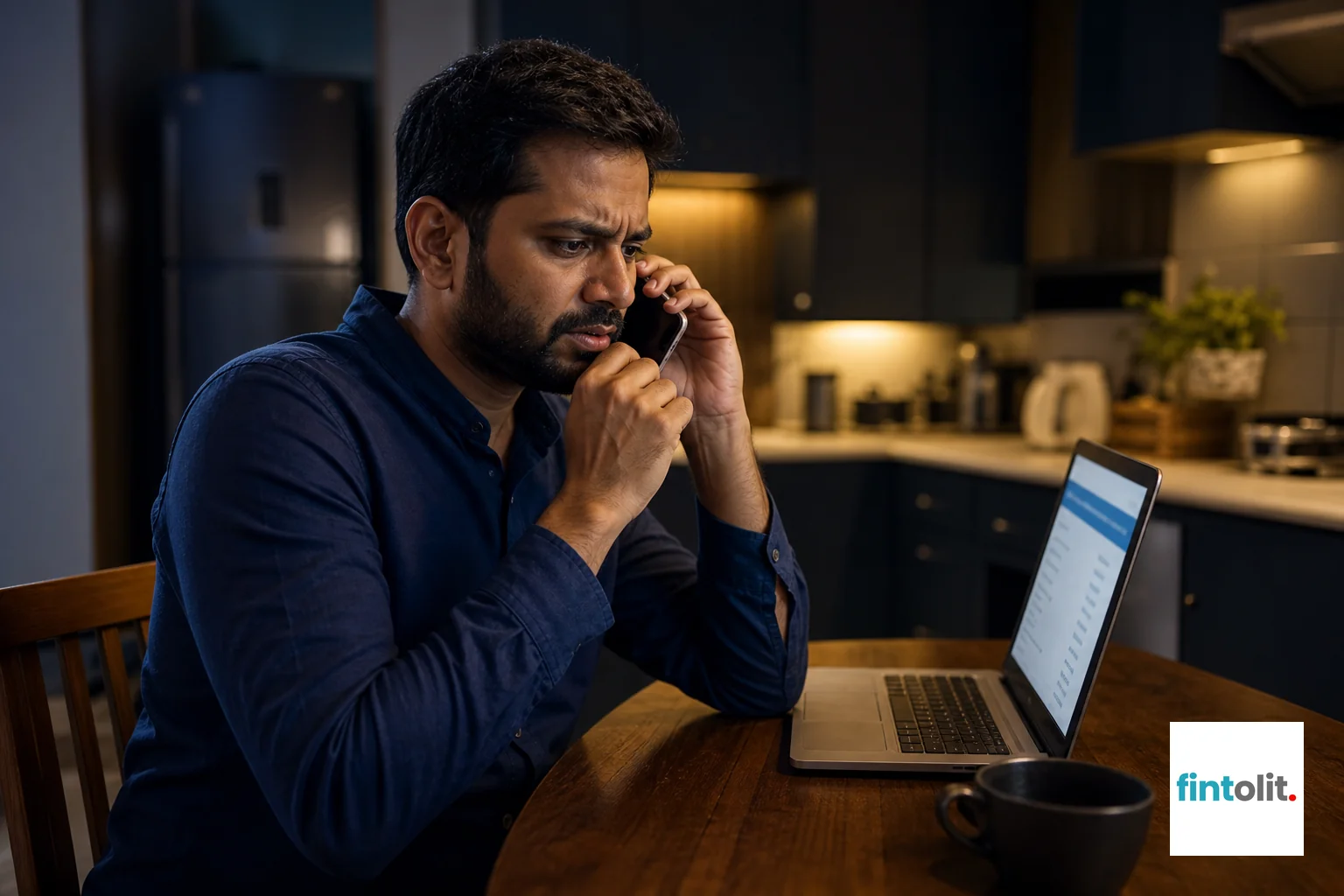
The first 60 minutes after you realise you've been scammed online decide whether your money comes back or disappears for good. If you act fast, you can file a cybercrime complaint India through the national portal, call the 1930 helpline to request a freeze on the transaction, and put your bank on formal notice, all before the scammer moves the funds out of reach.
Key Takeaways
- Call 1930 within the first hour: India's cybercrime helpline can flag your transaction for a freeze while the money is still sitting in the fraudster's account.
- File on cybercrime.gov.in, not just the police station: the portal is free, works 24x7, and gives you an acknowledgment number you'll need for every follow-up.
- Banks owe you zero liability if you report within 3 working days: under RBI rules, delay past that window shifts the loss risk onto you.
- An FIR is only needed for certain cases: large sums, repeat offenders, or blackmail cases usually need a formal FIR at your local cyber cell.
- Evidence disappears fast: screenshots, UPI reference numbers, and chat logs should be saved the moment you suspect fraud, not after you've calmed down.
Cybercrime Complaint India: At a Glance
| Step | Where | Cost | Typical Timeline |
|---|---|---|---|
| Report and freeze request | 1930 helpline | Free | Immediate, within golden hours |
| Online complaint | cybercrime.gov.in | Free | 10-15 minutes to file |
| Bank dispute | Your bank / card issuer | Free | Report within 3 working days for zero liability |
| FIR (if needed) | Local police / cyber cell | Free | Filed same day if evidence is ready |
| Legal consultation | Cyber law specialist | Fixed, upfront fee | 60-minute session, same day or next day |
| Case follow-up / court | Cyber crime court / civil suit | Varies by case | Weeks to months |
Online fraud isn't a rare event anymore. Delhi NCR sees a steady stream of UPI scams, fake job offers, and investment frauds reported every week, and the pattern is almost always the same: a victim panics, waits a day to "think it over," and by then the money has already been split across five other accounts. That's why the order of steps below matters as much as the steps themselves.
1. Call 1930 and Freeze the Money First
Before you write a single complaint, pick up the phone and dial 1930, the national cybercrime helpline. This isn't a general enquiry line. It's connected to a system that can flag the receiving bank account and request a freeze while your money is still sitting there, sometimes called the "golden hour" window.
Keep this ready before you call:
- Your bank account number and the exact amount debited
- The UPI transaction ID, IMPS reference number, or card transaction ID
- The time of the transaction, down to the minute if possible
- Any phone number, UPI ID, or website used by the scammer
The helpline will give you a complaint number. Write it down immediately; you'll need it when you file the full complaint online. It moves fast when there's a matching bank confirmation on the other end, so don't skip this call even if you plan to visit a police station later.
2. File Your Cybercrime Complaint on cybercrime.gov.in
The Ministry of Home Affairs runs a dedicated portal at cybercrime.gov.in for exactly this purpose. It's free, open all day and night, and doesn't require you to travel anywhere.
- Go to the portal and choose "Report Financial Fraud" for money-related scams, or "Report Other Cyber Crime" for harassment, hacking, or data theft.
- Register with your mobile number and OTP.
- Fill in the incident details: date, amount, mode of payment, and a plain description of what happened.
- Upload evidence: screenshots of chats, payment confirmations, fake websites, or emails.
- Submit and note down your acknowledgment number. This is your reference for every follow-up call or email.

Be specific in your description. Vague complaints like "I was cheated for money" get processed slower than ones that state the exact UPI handle, the app used, and the sequence of messages that led to the transfer. If the fraud involves a data breach rather than money, you might also want to read about how a fixed-fee legal consultation works so you know what a follow-up conversation with a lawyer will cost before you commit.
Need a Lawyer for clarity on your case?
3. Report to Your Bank and Card Network Separately
Filing on the government portal doesn't automatically inform your bank. You need to call your bank's fraud helpline or visit a branch and raise a formal dispute the same day, or at the latest, within three working days.
This timeline matters because the Reserve Bank of India's limited liability circular protects customers who report unauthorised transactions within three working days of receiving the notification. Report later than that, and the bank can push part of the loss back onto you, depending on how negligent your case looks.
Ask your bank for a written acknowledgment of your complaint and the reference number they generate internally. This becomes useful if you later need to escalate to the Banking Ombudsman or cite it in a consumer complaint. If the merchant or platform involved was an online seller, the process overlaps with what's covered in how a consumer complaint against an online seller actually works.
4. File a Local Police FIR When It's Needed
The online portal is enough for most straightforward fraud cases. But some situations genuinely need a formal FIR at a police station or a dedicated cyber cell:
- Losses above a few lakh rupees where the amount justifies a criminal investigation
- Sextortion, blackmail, or ongoing harassment where you need urgent police intervention
- Cases where the scammer has your identity documents and could misuse them further
- Disputes where you plan to pursue the matter in court and need an FIR as supporting evidence
Delhi, Gurugram, and Noida each have dedicated cyber cells under their police commissionerates, and Delhi NCR residents can usually walk in with their portal acknowledgment number to speed up the FIR process. Bring printouts of everything you submitted online; most stations will ask for a physical copy alongside the digital record.
If the case also touches a workplace angle, say a colleague accessed your data or a former employer misused your credentials, it's worth reviewing your position under employment contract rights for gig and salaried workers before you escalate.
Types of Online Scams and How They're Typically Handled
Not every scam plays out the same way, and the odds of getting your money back depend heavily on which type you're dealing with.
| Scam Type | Typical Loss Pattern | Recovery Odds | Best First Action |
|---|---|---|---|
| UPI / phishing link fraud | Small, one-time transfer | Moderate if reported within hours | Call 1930 immediately |
| Fake job offer scam | "Registration fee" paid upfront | Low, funds move fast | File on portal, alert bank |
| Investment / trading app fraud | Large sums over weeks | Low to moderate | File complaint, gather app screenshots |
| Sextortion / blackmail | Repeated smaller payments | Not about recovery, about stopping it | File FIR, block contact, don't pay again |
| Online seller / e-commerce fraud | Item never delivered or fake | Moderate via consumer forum | Consumer complaint plus portal report |
Notice the pattern: the earlier you act, the better your odds. Waiting even a single extra day drops recovery chances sharply for money-transfer scams, because funds get layered across multiple accounts within hours.
What to Look for When Choosing Legal Help for a Cybercrime Case
Filing the complaint yourself covers the basics. But when the amount is significant, the scammer is untraceable through the portal alone, or the bank is stalling on your dispute, a cyber law specialist changes the outcome. Here's what to actually check before you hire one.
- Real experience with cyber fraud cases, not a general practice lawyer: ask how many cybercrime complaints they've handled in the past year, not just their years at the bar.
- Upfront, fixed pricing: a lawyer who won't quote a clear fee before the first session is a red flag. You want to know the cost before you commit, not after.
- A verified profile you can check before paying: you should see the lawyer's name, background, and specialization first, not be assigned someone at random after payment.
- Continuity from consultation to closure: your case shouldn't get handed off between three different associates who don't know your file.
- A dedicated point of contact for updates: someone should be proactively telling you where your case stands, not leaving you to chase for information.

This is precisely the gap Fintolit was built to close. You can browse a verified lawyer's profile before you pay anything, and once you're in, the same lawyer stays with your case from the first call to closure, so you're never repeating your story to a new person every few weeks. For residents across Delhi, Gurugram, and Noida, sessions are available seven days a week, morning and evening, either online or with a lawyer visiting your home if you'd rather not travel while you're already stressed about the fraud.
Need a Lawyer for clarity on your case?
Common Mistakes That Cost Victims Their Money and Their Case
A few habits show up again and again in cases that don't end well.
- Waiting to "see if it resolves itself": scammers count on this hesitation. Every hour you wait is an hour the money has to move.
- Deleting the scam chat out of embarrassment: this is your strongest piece of evidence. Screenshot it before you block the number.
- Paying again to "unblock" or "reverse" the transaction: a common second-stage scam where the fraudster poses as a bank official offering to reverse the first loss for a fee. There is no legitimate process that requires you to pay to get your own money back.
- Not following up on your complaint number: filing and forgetting means nobody chases the bank on your behalf. Call back with your acknowledgment number after a week if you've heard nothing.
- Assuming a small amount isn't worth reporting: patterns matter to investigators. Your ₹2,000 loss might be the fifth report against the same account that week.
FAQs
Is filing a cybercrime complaint in India free?
Yes. Both the 1930 helpline and the cybercrime.gov.in portal are completely free government services. You never need to pay to file a report or track its status.
Can I file a cybercrime complaint without going to the police station?
For most financial fraud, yes, the online portal is enough to start the process and get your bank to act. A physical FIR becomes necessary only for larger losses, ongoing harassment, or cases you plan to take to court.
What if the scammer is based outside India?
You still file the complaint the same way. Cross-border cases take longer and often depend on cooperation between agencies, but reporting quickly still helps freeze the Indian bank account or wallet the money passed through.
Is there a time limit to file a cybercrime complaint?
There's no strict deadline to file, but recovery odds drop sharply after the first 24 to 72 hours because the money moves through multiple accounts. Report as soon as you notice the fraud, ideally the same day.
What happens after I get my acknowledgment number?
Your complaint gets routed to the relevant state cyber cell for investigation. You can check status updates on the portal using your acknowledgment number, and you should also follow up with your bank in parallel.
Getting scammed online is disorienting, and figuring out the right sequence of calls and forms while you're still upset is genuinely hard. That's the whole point of talking to someone who's handled these cases before. If your case involves a larger sum, a stalling bank, or a scammer who's threatening you further, don't navigate it alone. Book a consultation with a verified cyber law specialist at Fintolit and walk out with a clear, fixed-fee plan for what happens next. You can also chat with us on WhatsApp if you'd rather describe your situation first before deciding. Every minute you wait is a minute your money keeps moving, so book your consultation today and get a real plan instead of another form to fill out.
You're just getting to the good part.