

A landlord in Gurugram lost three months of rent because one line was missing from his agreement: a lock-in period. A Delhi tenant fought a six-month dispute over a maintenance clause that said "as applicable" instead of naming who pays for what. These are the common mistakes people make while drafting a rent agreement, and they usually trace back to two or three sentences that nobody thought were worth a second read.
Key Takeaways
- Missing lock-in clauses let tenants exit early with zero penalty, which cost one Gurugram landlord three months' rent in lost income.
- Vague maintenance wording like "as applicable" or "mutually agreed" turns small repair disagreements into six-month standoffs.
- Undefined deposit deduction terms are the single biggest source of post-move-out disputes in Delhi NCR.
- Online templates cover the basics but rarely account for local rent laws in Delhi, Noida, or Gurugram, or a tenant's actual situation.
- A verified lawyer reviewing the draft before signing catches these gaps in a single consultation, well before either party is locked into a bad clause.
At a Glance: Rent Agreement Mistakes and Fixes
| Mistake | What It Causes | Fix a Lawyer Applies |
|---|---|---|
| No lock-in period | Tenant leaves early, landlord loses rental income with no recourse | Mutual lock-in clause with a defined penalty amount |
| Vague maintenance clause | Disputes over who pays for repairs, appliances, or structural issues | Itemized responsibility list by repair type |
| Undefined deposit terms | Deductions disputed after move-out, delayed refunds | Clear deduction categories and a refund timeline |
| No notice period clarity | Confusion over how much notice either party must give | Specific notice period in days, tied to the lock-in |
| Skipped registration | Agreement holds less weight as evidence in a dispute | Registration guidance matched to local rules |
| No escalation clause | Fights over rent hikes at renewal time | Fixed annual escalation percentage stated upfront |
Fintolit's own readers have shown us where the pain actually sits. A checklist-style post on drafting rent agreements online kept people reading for over 24 seconds on average, well above this site's typical engagement. A post listing red flags to avoid barely held attention at all. That gap tells us something: readers want to see what actually goes wrong in a real agreement, not another generic list. This post is built around real, anonymized cases instead.
Case 1: The Missing Lock-in Clause That Cost a Landlord Three Months' Rent
A landlord in Gurugram signed an 11-month agreement with a tenant using a template downloaded off a search engine. The template had a rent amount, a deposit figure, and a notice period. It had no lock-in clause at all.
Three months in, the tenant found a cheaper flat and left with a one-month notice, exactly as the agreement allowed. The landlord had budgeted on eleven months of rent. He got three, plus a vacant flat during peak moving season with no penalty to claim against.
A lock-in clause fixes this by binding both sides to a minimum stay, usually with a defined financial penalty if either party exits early. It's a two-line addition. Templates skip it because it needs a number the drafter has to actually think about, not copy from a form.
Case 2: A Vague Maintenance Clause That Sparked a Six-Month Dispute
A Delhi tenant's agreement said maintenance costs would be shared "as mutually agreed." Nobody defined what that meant when the geyser broke in month four.
The landlord said appliance repairs were the tenant's job. The tenant said the geyser was fixed equipment, part of the flat, and the landlord's responsibility. Neither side backed down. Rent payments got delayed as leverage, a legal notice went out, and the case dragged for close to six months before it settled out of court.
An itemized maintenance clause would have stopped this before it started. Name the categories: structural repairs, fitted appliances, plumbing, electrical fittings, and say who pays for each one. This single change is one of the fastest fixes a lawyer applies during a drafting session, and it's exactly the kind of gap our rent agreement red flag checklist flags before signing.
Need a Lawyer for clarity on your case?
Case 3: Security Deposit Terms That Were Never Written Down Properly
A Noida tenant paid a two-month security deposit. The agreement mentioned the amount but said nothing about how deductions would work at move-out, or when the refund would actually arrive.
When the tenant left, the landlord deducted a sum for "wear and tear" without an itemized breakdown. The tenant disputed the amount, refused to accept the reduced refund, and the disagreement sat unresolved for weeks before both sides agreed on a compromise figure.
None of this needed a court case. It needed a clause listing exactly what counts as deductible damage, what doesn't, and a firm refund timeline, typically 15 to 30 days after the flat is vacated and inspected.
Why Do These Small Clauses Cause Such Big Disputes?
Small clauses cause big disputes because a template can only cover generic terms, not your specific rent amount, your city's rent rules, or the verbal promises made during the flat viewing. Once a disagreement starts, only the written text matters, and gaps in it become the entire fight.
Verbal side-agreements are the biggest trap here. A landlord tells a tenant "don't worry about the parking fee" or a tenant tells a landlord "I'll definitely stay the full year." None of that holds up if it isn't in the document. Courts and Rent Controllers work off what's written, not what was said in the living room during negotiation.
There's also a real difference across Delhi NCR. Delhi's Rent Control framework, Noida's UP-based rules, and Gurugram's practices don't treat lock-in periods, registration, or notice terms identically. A template built for one city can quietly miss requirements that matter in another. Anyone weighing a property dispute in Delhi against a similar case in Noida or Gurugram will find the procedural pace and expectations aren't the same either.
What a Verified Lawyer Actually Checks Before You Sign

A lawyer reviewing your draft before signing checks the lock-in period, the notice terms, the maintenance split, deposit deduction rules, and the annual rent escalation figure, then flags anything missing or worded ambiguously. This happens in one sitting, before either side is bound to the paper.
Specifically, that review covers:
- Lock-in and notice period alignment: making sure the two clauses don't contradict each other.
- Maintenance and repair responsibility: named by category, not left to "mutual agreement."
- Deposit terms: deduction categories and a firm refund timeline in days.
- Rent escalation: a fixed percentage for renewal, agreed in advance instead of negotiated under pressure later.
- Registration compliance: whether the agreement needs to be registered given the rent amount and tenure, and what that means for its weight as evidence later.
If you're also weighing whether to draft other agreements yourself, our guide on legal agreement basics every Indian adult needs is a useful starting point beyond rent contracts specifically.
How Fintolit's Drafting Process Prevents These Mistakes
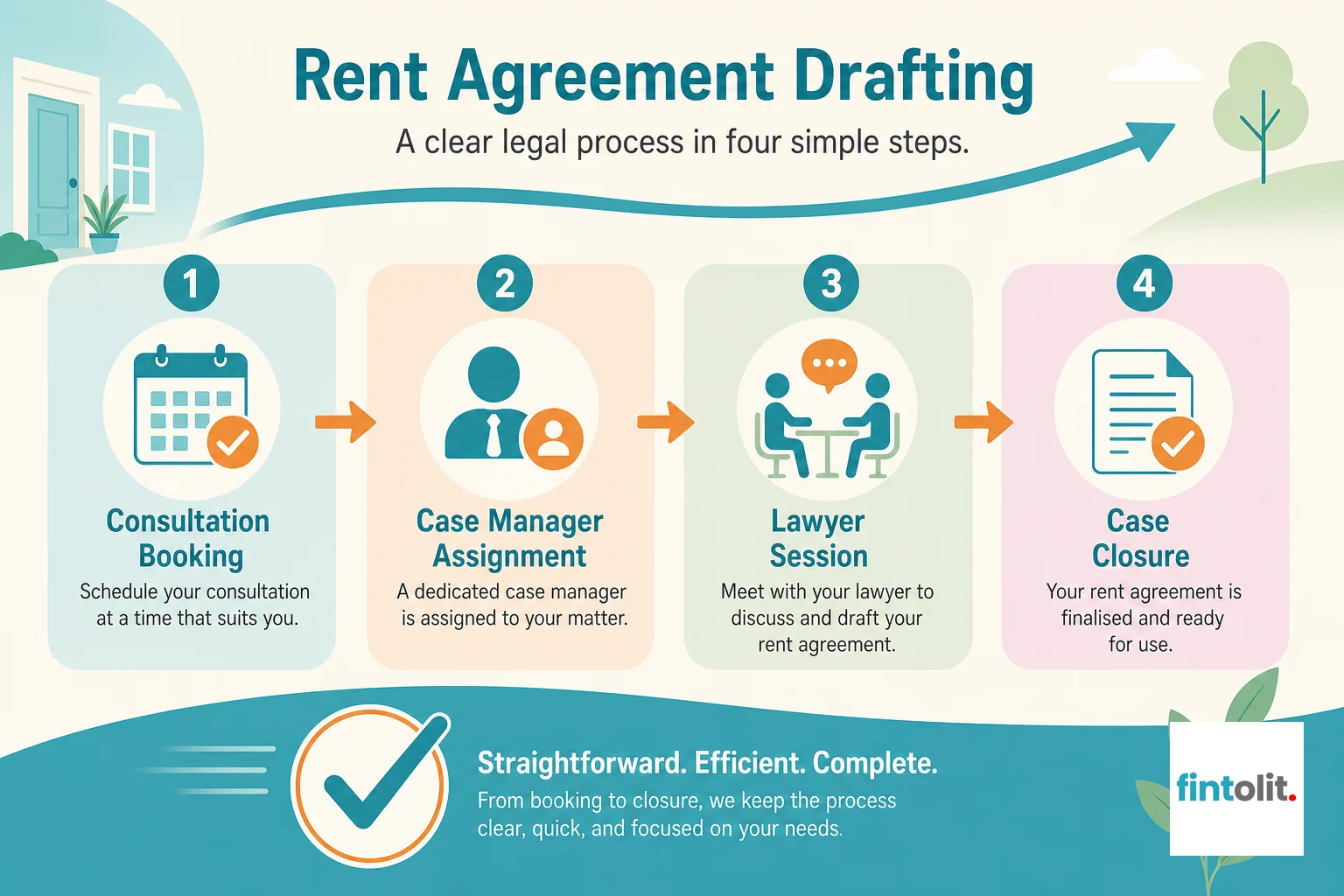
Fintolit prevents these mistakes by putting a verified, senior lawyer on your specific draft, with a case manager tracking the file, before you sign anything.
Here's how it actually runs. You describe your situation, whether you're a landlord in Gurugram or a tenant in Noida. You're shown the profile of the specific lawyer, name and background included, before you pay anything. A dedicated case manager is assigned to keep the process moving with proactive updates. The same lawyer then reviews or drafts your agreement, and stays with your case through to closure, no handoffs to someone new midway.
Sessions run seven days a week, morning and evening, both online and through the "Lawyer at Home" option if you'd rather sit across the table with someone reviewing your clauses line by line. Pricing is fixed and upfront, so there's no surprise bill after the consultation ends. If you're still deciding between formats, our comparison on online vs offline lawyer for real cases breaks down which works better for documentation-heavy matters like this one.
Need a Lawyer for clarity on your case?
A rent agreement doesn't need to be long to be safe. It needs to name every scenario that could actually go wrong, in writing, before either side signs.
FAQs
Can I use an online template safely?
A generic template covers the basics but rarely matches your city's rules or your specific arrangement, which is exactly where the three cases above went wrong. Use one as a starting draft, then have a lawyer check it before signing, not after a dispute starts.
What happens if a dispute arises after signing?
You can still resolve it, usually through a written notice first, then mediation or a Rent Controller filing if that fails, but the process is slower and more stressful than catching the gap before signing. A poorly worded clause also weakens your position once the fight is already underway.
Is registration mandatory in Delhi NCR?
Registration requirements depend on the agreement's tenure and rent amount, and the exact rule differs slightly between Delhi, Noida, and Gurugram. An unregistered agreement above the threshold carries less weight as evidence if a dispute reaches court, which is worth checking before you finalize the draft.
If you're currently negotiating a lease, don't wait for the disagreement to happen first. Book a consultation with a verified Fintolit lawyer and have your draft reviewed clause by clause before you sign. You'll know exactly who's reviewing your file, what it costs upfront, and that the same lawyer stays with you if anything needs fixing later. Prefer to ask a quick question first? Chat with us on WhatsApp and get pointed in the right direction.
You're just getting to the good part.