
Ask ten people in Delhi whether they have a will, and nine will say the same thing: "I'll get to it someday." That someday rarely comes. And when it doesn't, the people left behind a spouse, children, ageing parents are the ones who pay the price. Will drafting in Delhi is not a task reserved for the elderly or the wealthy. It is one of the most practical things any adult can do to protect the people they love and the assets they have spent a lifetime building.
This guide covers everything you need to know: what Indian law requires, what a valid will must include, the mistakes that make wills legally worthless, and how platforms like Fintolit make the entire process simple, affordable and completely confidential whether you prefer an online consultation or a lawyer who comes to your home.
Why Most Delhi Families Skip Will Drafting (And Pay for It Later)
Here is something most people get wrong: a will is not about death. It is about control. Without one, you lose all say over what happens to everything you own the moment you are gone. Your flat in Dwarka, your fixed deposits, your jewellery, your mutual fund portfolio, all of it gets distributed according to a law that does not know your family, your wishes, or your circumstances.
Under the Indian Succession Act, 1925, dying without a will (called dying "intestate") triggers a fixed legal formula for inheritance. For Hindus, Buddhists, Sikhs, and Jains, the Hindu Succession Act applies. For Christians and Parsis, the Indian Succession Act governs. In each case, the law decides who gets what, and the result is rarely what the deceased would have chosen.
The consequences are real and common. Property disputes among siblings are one of the leading causes of civil litigation in Delhi courts. Families spend years and lakhs of rupees fighting over assets that a properly drafted will could have distributed in weeks. A surviving spouse may find themselves legally entitled to only a fraction of the family home. Minor children may have no appointed guardian for their inheritance. A trusted sibling may be cut out entirely because the law does not recognise emotional closeness.
Will drafting in Delhi is not complicated. But skipping it is one of the most expensive decisions a family can make, not in money paid upfront, but in the grief, conflict, and legal costs that follow.
"A will is the last conversation you have with your family. Make sure it says what you actually mean."
If you own a bank account, a piece of property, a vehicle, or even a significant amount of jewellery, you need a will. Age is irrelevant. Wealth level is irrelevant. What matters is that you have something to leave behind and people you want to leave it to.
What Indian Law Says About Will Drafting in Delhi
Before you sit down to draft a will, it helps to understand the legal framework that governs it. Will drafting in Delhi is primarily governed by two laws depending on your religion:
- Indian Succession Act, 1925, applies to Hindus, Sikhs, Buddhists, Jains, Christians, and Parsis
- Muslim Personal Law (Shariat) Application Act, 1937, applies to Muslims, with specific rules on what portion of an estate can be bequeathed by will
Who Can Make a Will?
Any person who is at least 18 years old and of sound mind can make a will. "Sound mind" means the person understands the nature of the document, the extent of their property, and who their natural heirs are. A will made under coercion, fraud, or undue influence is legally void.
Key Legal Requirements
For a will to be legally valid in India, it must meet these conditions:
Need a Lawyer for clarity on your case?
- It must be in writing (typed or handwritten, both are valid)
- It must be signed by the testator (the person making the will)
- It must be signed in the presence of at least two witnesses
- Both witnesses must sign the will in the presence of the testator
- Witnesses must not be beneficiaries under the will
Registration vs. Unregistered Wills
Good news your will doesn't need to be registered to be valid in India! A handwritten, signed will with two witnesses works just fine. That said, registering it at the Sub-Registrar's office makes it much harder to challenge later, so if you have significant assets in Delhi, it's definitely worth doing.
Will vs. Nomination: An Important Distinction
Many people assume that a nominee on a bank account or insurance policy is the same as a beneficiary under a will. They are not. A nominee is a trustee, they receive the asset on behalf of the legal heirs, but the will (or succession law) determines who ultimately owns it. This is a critical distinction that a family lawyer in Delhi will always clarify during a will drafting consultation.
What a Legally Valid Will Must Include
A well-drafted will is clear, complete, and leaves no room for interpretation. Here is what every will drafted in Delhi should contain:
1. Declaration of Identity and Testamentary Capacity
The will should begin with your full name, address, age, and a clear statement that you are making this will of your own free will while being of sound mind. This declaration is your first line of defence against any future challenge.
2. Complete Asset Inventory
List every asset you own with enough detail to identify it unambiguously. This includes:
- Immovable property (flat, house, plot), with full address and registration details
- Bank accounts, account numbers and bank names
- Fixed deposits, PPF, mutual funds, shares
- Jewellery and valuables, described in detail
- Vehicles, with registration numbers
- Digital assets, email accounts, social media, cryptocurrency wallets
- Business interests or partnership shares
3. Named Beneficiaries with Clear Shares
Name each beneficiary by their full name and relationship to you. Specify exactly what they receive, a percentage, a specific asset, or a monetary amount. Vague language like "my children shall share equally" can cause disputes if the number of children is contested or if one predeceases you.
4. Appointment of an Executor
An executor is the person responsible for carrying out the instructions in your will. Choose someone trustworthy, organised, and ideally younger than you. Always name an alternate executor in case your first choice is unable or unwilling to act.
5. Guardianship Clause for Minor Children
If you have children under 18, your will should name a guardian for both their person and their inheritance. Without this, a court will decide, and the court's choice may not be yours.
6. Residuary Clause
A residuary clause covers any assets not specifically mentioned in the will. Without it, unmentioned assets fall under intestate succession law, defeating the purpose of having a will in the first place.
7. Witness Signatures
Two adult witnesses must sign the will in your presence and in each other's presence. They must not be beneficiaries. Their full names, addresses, and signatures must appear on the document.
Getting all of these elements right is exactly why will drafting in Delhi is best done with a qualified lawyer rather than a downloaded template. A small error in any one of these areas can render the entire document challengeable in court. For a broader look at what legal documentation costs in India, see our guide on legal documentation costs and why prices differ.
7 Common Will Drafting Mistakes That Invalidate a Will

Most will-related disputes in Delhi courts do not arise because someone was dishonest. They arise because the will was poorly drafted. Here are the seven mistakes that legal professionals see most often, and that you must avoid.
Need a Lawyer for clarity on your case?
Mistake 1: Vague Asset Descriptions
Writing "my property in Delhi" instead of the full address and registration number is an invitation to dispute. If you own more than one property, or if the description could apply to multiple assets, beneficiaries will fight over the interpretation.
Mistake 2: Witnesses Who Are Also Beneficiaries
This is one of the most common errors in self-drafted wills. Under Indian law, a witness who is also a beneficiary does not automatically invalidate the will, but their bequest under the will becomes void. You lose the ability to leave anything to someone who witnessed your signature.
Mistake 3: Failing to Update After Major Life Events
Marriage, divorce, the birth of a child, the death of a beneficiary, or the purchase of a new property, each of these events should trigger a review of your will. An outdated will can create more confusion than no will at all.
Mistake 4: No Executor or a Poor Choice of Executor
Naming an executor who is older than you, lives abroad, or has a conflict of interest with the beneficiaries is a recipe for delays and disputes. Choose carefully and always name a backup.
Mistake 5: Ignoring Jointly Held Assets
Assets held jointly with a right of survivorship pass automatically to the surviving co-owner, your will has no effect on them. If you want a different outcome, you need to restructure the ownership before drafting the will.
Mistake 6: Using Unreviewed Templates
Free will templates downloaded from the internet are generic. They do not account for Delhi-specific property laws, your family structure, or the specific assets you own. A template that works for one person can be legally inadequate for another. This is why free legal advice is not always enough for something as important as a will.
Mistake 7: Forgetting Digital Assets
In 2026, many people hold significant value in digital form, cryptocurrency, online trading accounts, domain names, digital businesses. Without specific instructions and access credentials (stored securely), these assets can be lost permanently after death.
Will Drafting in Delhi: Step-by-Step Process with Fintolit

One of the most common reasons people delay will drafting in Delhi is the assumption that it requires multiple trips to a lawyer's office, hours of paperwork, and a large upfront fee. With Fintolit, the process is structured, transparent, and designed around your schedule, not a lawyer's availability.
Step 1: Describe Your Situation
Start by sharing the basics: your family structure, the assets you own, and what you want to happen to them. You do not need to have everything figured out. A dedicated case manager will help you organise your thoughts and identify anything you may have missed.
Step 2: Your Dedicated Case Manager Takes Over
Every Fintolit client is assigned a dedicated case manager who acts as your single point of contact throughout the process. They coordinate with the lawyer, track document requirements, follow up on pending items, and make sure nothing falls through the cracks. You do not need to chase anyone or repeat your story multiple times. To understand how much value a case manager adds to any legal process, read our detailed post on how a legal case manager can help you.
Step 3: Consultation with a Verified Senior Lawyer
You are matched with a verified, senior lawyer who specialises in wills and estate planning. The consultation can happen in two ways:
- Online consultation, a 30 to 60-minute video or phone session from wherever you are in Delhi or the NCR
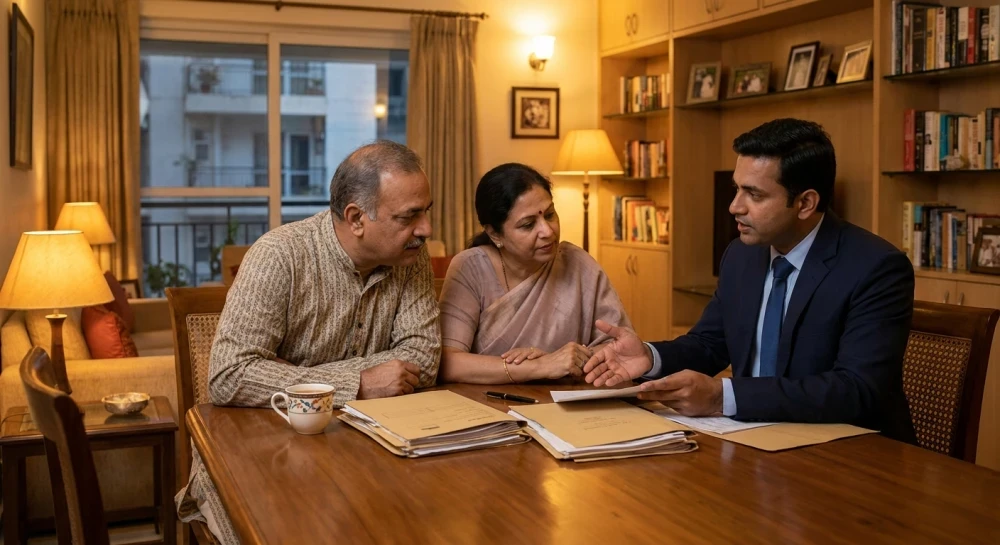
- Lawyer at Home, a 60 to 80-minute in-person session at your home or office, ideal for sensitive family matters or when you prefer face-to-face discussion
During this session, the lawyer reviews your asset list, clarifies your wishes, explains the legal implications of each decision, and answers every question you have, in plain language, without jargon.
Need a Lawyer for clarity on your case?
Step 4: Draft Prepared and Reviewed
Based on the consultation, the lawyer prepares a draft will that is specific to your situation. You review it, request changes, and the lawyer revises until you are completely satisfied. This is not a template with your name inserted, it is a document built around your family, your assets, and your wishes.
Step 5: Signing, Witnessing, and Optional Registration
Once the final draft is approved, your case manager guides you through the signing process, including how to arrange witnesses correctly. If you choose to register the will, your case manager explains the process at the relevant Sub Registrar's office in Delhi and what documents you need to carry.
Throughout every step, Fintolit handles your personal information and documents with complete confidentiality. Your family details, asset information, and wishes are never shared beyond the lawyer and case manager assigned to your case.
Ready to get started? Book a consultation and your case manager will reach out within hours.
Should You Register Your Will? What Delhi Residents Need to Know
Registration of a will in Delhi is optional, but for most people with significant assets, it is a decision worth making. Here is what you need to know.
How Will Registration Works in Delhi
To register a will in Delhi, you visit the Sub Registrar's office in the district where you reside or where your property is located. You bring the original will, two witnesses, and valid identity proof. The Sub Registrar records the will and stores a copy. The original is returned to you.
Alternatively, you can apply for "safe custody", the Sub Registrar keeps the original will in a sealed envelope, to be opened only after your death upon application by the executor. This is particularly useful if you are concerned about the will being tampered with or lost.
Why Registration Matters
A registered will carries significant legal weight. It is harder to challenge on grounds of forgery or coercion. It creates an official record that the will existed and was in a specific form on a specific date. In Delhi's probate courts, a registered will typically moves through the process faster than an unregistered one.
Registration becomes especially important in these situations:
You own high value immovable property in Delhi
You have a blended family or complex inheritance structure
There is any history of family conflict over assets
You are an NRI with property in India
You are making a will that departs significantly from what the law would otherwise provide
Probate in Delhi
Probate is the legal process by which a court certifies that a will is valid and authorises the executor to act. In Delhi, probate is required for wills involving immovable property in certain situations. A property lawyer in Delhi can advise you on whether probate will be necessary for your specific estate.
How Much Does Will Drafting in Delhi Cost?
Cost is one of the most common reasons people delay will drafting in Delhi. The reality is that the cost of not having a will, in legal fees, court time, and family conflict, almost always exceeds the cost of drafting one properly.
The cost of will drafting in Delhi varies based on several factors:
Complexity of the estate, a simple will with one property and two beneficiaries costs less than a will covering multiple properties, business interests, and minor children
Number of assets, more assets require more detailed drafting and review
Registration fees, Sub Registrar fees in Delhi are relatively modest, but vary by district
Lawyer's experience, senior lawyers with estate planning expertise charge more, but the quality of the document reflects that
Traditional law firms in Delhi often charge opaque fees with no clear breakdown. You may be quoted one amount and billed another. With Fintolit, pricing is fixed and transparent, you know exactly what you are paying before the consultation begins. There are no hidden charges, no surprise invoices, and no pressure to add services you do not need.
Need a Lawyer for clarity on your case?
For a detailed breakdown of what legal documentation typically costs across India, our guide on legal fees in India (2026) is a useful reference. And if you are weighing the value of professional help against doing it yourself, our post on online legal consultation in Delhi explains what you get from a verified lawyer that a template simply cannot provide.
The short answer: will drafting in Delhi with a qualified lawyer is more affordable than most people assume, and far less expensive than the alternative.
Frequently Asked Questions About Will Drafting in Delhi

Can I write my own will without a lawyer?
Yes, legally you can. A handwritten will signed by two witnesses is valid under Indian law. However, self drafted wills are the most commonly challenged and the most frequently found to have errors that reduce their legal effectiveness. For anything beyond the simplest estate, professional drafting is strongly recommended.
What happens if I die without a will in Delhi?
Your assets are distributed according to the applicable personal law, Hindu Succession Act, Indian Succession Act, or Muslim Personal Law. The distribution formula is fixed and does not account for your personal wishes, the needs of individual family members, or the relationships you valued most. Your executor is appointed by the court, not by you.
Can a will be challenged in court?
Yes. Common grounds for challenging a will include lack of testamentary capacity, undue influence, fraud, or improper execution (missing witnesses, unsigned document). A well-drafted, properly witnessed, and registered will is significantly harder to challenge successfully.
How often should I update my will?
Review your will every three to five years, and immediately after any major life event: marriage, divorce, the birth of a child, the death of a beneficiary, a significant change in your assets, or a change in your wishes. An outdated will can create as many problems as no will at all.
Is a will made in Delhi valid across India?
Yes. A will validly executed in Delhi is enforceable across India. However, if you own property in multiple states, it is worth noting that probate requirements may vary. Your lawyer can advise on any state-specific considerations.
Can NRIs draft a will for Indian property?
Yes. NRIs can draft a will in India or abroad to cover their Indian assets. If drafted abroad, the will should comply with Indian legal requirements or be accompanied by a separate Indian will for Indian assets. Fintolit can connect NRIs with verified lawyers for online consultations covering Indian property matters.
What is the difference between a will and a living will?
A will (or "last will and testament") deals with the distribution of your assets after death. A living will (also called an advance directive) records your medical wishes in case you become incapacitated and cannot communicate. They serve entirely different purposes and are governed by different laws in India.
What is the role of an executor in a will?
The executor is the person you appoint to carry out the instructions in your will. They are responsible for identifying and valuing assets, paying any outstanding debts, applying for probate if required, and distributing assets to beneficiaries. Choosing the right executor is one of the most important decisions in the will drafting process.
Protect Your Family with Will Drafting in Delhi, Start Today
A will is not a document about dying. It is a document about caring, for your spouse, your children, your parents, and everyone else who depends on you. Will drafting in Delhi does not have to be complicated, expensive, or time-consuming. With the right legal support, it can be done in a matter of days, with complete confidentiality and the confidence that every detail has been handled correctly.
Need a Lawyer for clarity on your case?
Fintolit makes this process genuinely accessible. A dedicated case manager guides you from the first conversation to the final signature. A verified senior lawyer drafts a document that reflects your exact wishes and meets every legal requirement. And whether you prefer an online session or a lawyer who comes to your home, the process fits around your life, not the other way around.
Do not leave your family's future to a legal formula that does not know them. Book your consultation with Fintolit today and take the first step toward a will that actually says what you mean. If you have questions before booking, chat with us on WhatsApp and a case manager will respond promptly.
You're just getting to the good part.