
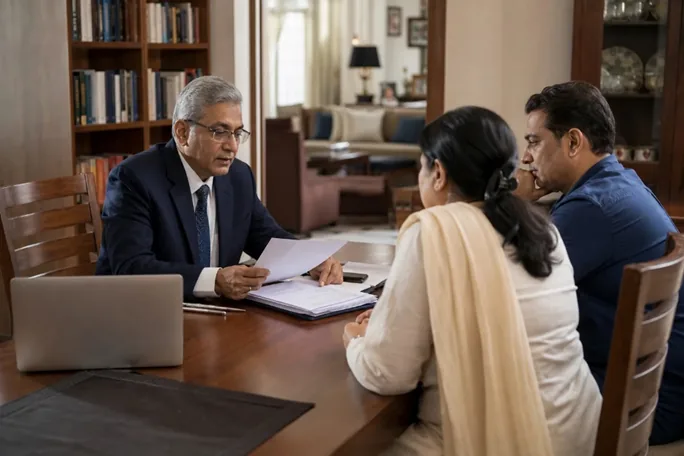
Most people don't call a divorce lawyer the moment a marriage starts feeling unworkable. They wait, through months of arguments, through a slow withdrawal of trust, sometimes through years of trying to "fix things quietly”, and only reach out once a situation has already escalated: a spouse has moved out, a child custody fight has begun, or a partner has emptied a joint account.
By then, decisions that could have been made calmly and strategically often have to be made under pressure instead. This isn't about rushing anyone toward divorce. It's about understanding that a divorce lawyer consultation earlier in the process gives you information, options, and protection, regardless of whether you ultimately separate or stay.
Here's how to actually recognise the right moment, and why waiting almost always costs more than acting early.
Why People Wait Too Long (And Why It Backfires)
There are understandable reasons people delay speaking to an advocate: hope that things will improve, fear of "making it official," social or family pressure, or simply not knowing where to start. But delay has real costs:
- Evidence and financial records get harder to trace the longer things drift , bank statements, property transactions, and communication records are easiest to organise close to the events themselves
- Emotional decisions replace strategic ones when a crisis finally forces action (a sudden separation, a spouse filing first, a child being kept away)
- Legal rights have timelines. Certain protections, especially around domestic violence, maintenance, and custody, are strongest when acted on promptly
- The other party may already be consulting a lawyer, quietly building their position while you're still hoping things will resolve on their own
None of this means you need to rush into filing for divorce. It means you need information early enough to make a real choice, not a forced one.
The Moments When You Should Actually Talk to a Lawyer
1. When you’re Considering Separation, Even Informally
You don't need to have decided on divorce to benefit from a consultation. If you're seriously weighing it, even quietly, even without telling anyone, an advocate can walk you through what separation actually looks like under Indian law: maintenance obligations, what happens to jointly owned property, and how custody arrangements typically unfold. This single conversation often reframes the entire decision, for better or worse.
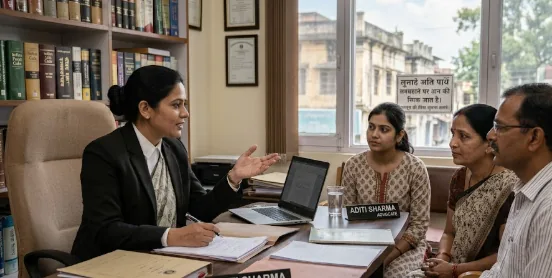
2. When There's Any Form of Cruelty, Abuse, or Threats
Indian courts have taken an expansive view of what constitutes grounds for divorce under cruelty. In the landmark case Samar Ghosh v. Jaya Ghosh (2007) 4 SCC 511, the Supreme Court laid down illustrative (though not exhaustive) categories of mental cruelty , including sustained neglect, humiliating conduct, unilateral decisions that strike at the foundation of the marriage, and prolonged separation that has rendered the relationship a "legal fiction" with no real substance left. If you recognise any of these patterns in your own marriage, this is not something to sit on. Speak to an advocate about your options and, if there's any physical danger, about protective remedies available to you immediately.
3. When you’re Already Living Separately, and Reconciliation Feels Genuinely Over
If you and your spouse have been living apart and there's no real prospect of reconciliation, it's worth knowing your options well before either of you takes unilateral action. India recognises divorce by mutual consent under Section 13B of the Hindu Marriage Act, which is significantly faster and less adversarial than a contested divorce when both parties agree on terms.
In Amardeep Singh v. Harveen Kaur (2017) 8 SCC 746, the Supreme Court clarified that the standard six-month "cooling-off" period between the first and second motions in a mutual consent divorce is directory, not mandatory , meaning courts can waive it where the marriage has clearly and irretrievably broken down and all disputes (alimony, custody, property) have been genuinely settled. This single ruling has made mutual divorce considerably faster for couples who already know where they stand, but only if you go in with the right legal preparation.
Need a Lawyer for clarity on your case?
4. When Money, Property, or Children Are Already Becoming a Battleground
The moment financial disputes or custody disagreements surface, even before any formal filing, is the moment to get legal guidance. Waiting until the other side has already "made their move" (transferred funds, changed school enrolment, restricted access to children) puts you on the back foot in negotiations or court.
5. When you’re Being Pressured to Sign Something
Settlement documents, consent terms, or even a simple "agreement" drafted without legal review can permanently affect your rights to maintenance, property, or custody. Never sign anything related to separation or divorce, however informal it seems, without an advocate reviewing it first.
6. When You Genuinely Don't know what you’re entitled to
Many people, particularly women without independent financial documentation, simply don't know what maintenance, alimony, or share of marital assets they may be entitled to. A consultation isn't a commitment to act, its clarity. Courts have consistently emphasised that financial settlements should be fair and adequately negotiated, as seen in cases like Amardeep Singh, where the wife's alimony was substantial precisely because it was properly negotiated with legal guidance before the divorce was finalised.
Mutual Divorce vs. Contested Divorce: Know the Difference before You Decide
This is one of the most searched questions for good reason, the path you take changes everything about timeline, cost, and emotional toll.
Mutual divorce advocate India route: Both spouses agree to separate and have resolved issues like custody, maintenance, and property division. This is faster (potentially a few months, especially after the Amardeep Singh ruling), less expensive, and far less emotionally draining.
Contested divorce route: One spouse seeks divorce on specific legal grounds (cruelty, desertion, adultery, etc.) while the other disputes it, or where there's no agreement on settlement terms. This is significantly longer, often spanning years, and requires building a documented legal case , which is exactly why early legal guidance matters so much here. The longer you wait to consult an advocate in a contested situation, the harder it becomes to gather evidence and build your position.
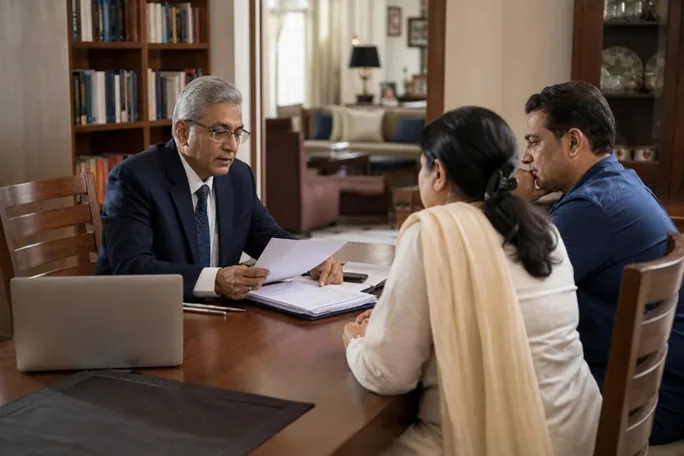
What a Good First Consultation Should Actually Tell You
If you're searching for a divorce lawyer online India or trying to book your first divorce lawyer consultation, here's what a genuinely useful first session should cover:
- Whether your situation realistically points toward mutual or contested divorce
- What you're likely entitled to (or liable for) regarding maintenance and property
- How child custody is typically decided in cases similar to yours
- What documentation you should start gathering now, regardless of what you decide later
- A realistic timeline and cost expectation , not vague reassurance
If a consultation doesn't give you this kind of clarity, it is not worth your time or money.
How Fintolit Comes in This
Talking to a divorce advocate for the first time is rarely easy, there's often guilt, fear, or simple uncertainty about where to even begin. Fintolit is built to remove the friction from that first step, so you can get real clarity without the runaround.
Fintolit is a DPIIT-certified legal services platform, and every advocate in our network is rigorously vetted, specialists, not generalists, each with 10+ years of active courtroom experience in family law matters specifically. You're not getting a generic legal opinion; you're speaking to someone who has actually represented people through exactly what you're facing.
Here's what you get when you work with Fintolit:
- A dedicated case manager who handles your case personally and discreetly, from your very first call
- A 60-minute consultation with a senior specialist advocate , flat fee, no per-minute meter, full time to actually explain your situation
- 15 days of direct lawyer access , reach out anytime within this window with follow-up questions as you process what you've learned
- A written consultation summary and legal roadmap , a clear, documented plan for your situation, whether that's mutual divorce, contested proceedings, or simply understanding your rights for now
- 24x7 case manager support , because questions about a marriage rarely arrive only during office hours
- Fixed, transparent pricing , no surprise costs at an already difficult time
- End-to-end support as a one-stop solution , beyond the consultation, Fintolit handles everything your advocate recommends: drafting petitions, negotiating settlement terms, custody documentation, and court representation, all the way through to resolution
You don't need to have made up your mind to reach out. You just need clarity, and that's exactly what the first conversation is for.
Need a Lawyer for clarity on your case?
Visit Fintolit to book a confidential consultation with a specialist divorce advocate.
Frequently Asked Questions
1. How do I find a good divorce lawyer online in India? Look for platforms that connect you with verified, experienced family law specialists rather than general practitioners, and that offer a structured first consultation rather than an open-ended, unclear engagement. Fintolit's DPIIT-certified panel is built specifically for this, every advocate has 10+ years of active courtroom experience.
2. How long does a mutual divorce take in India? Under Section 13B of the Hindu Marriage Act, mutual divorce traditionally required a minimum six-month cooling-off period after the first motion. Following the Supreme Court's ruling in Amardeep Singh v. Harveen Kaur, this period can be waived by courts when the marriage has clearly and irretrievably broken down and all settlement terms are finalised, significantly shortening the timeline in many cases.
3. What's the difference between mutual divorce and contested divorce? Mutual divorce requires both spouses to agree to separate and to have resolved key issues like maintenance and custody, it's faster and less adversarial. Contested divorce involves one party seeking divorce on specific legal grounds while the other disputes it, and typically takes considerably longer.
4. Do I need an advocate if my spouse and I already agree on everything? Yes. Even in a fully agreed mutual divorce, an advocate ensures your settlement terms are legally sound, properly documented, and enforceable, protecting you from future disputes over what was "agreed" informally.
5. What counts as mental cruelty in a divorce case? Indian courts assess this case by case, but the Supreme Court in Samar Ghosh v. Jaya Ghosh laid out illustrative examples including sustained neglect, humiliating or abusive conduct, baseless allegations, and prolonged separation with no emotional connection remaining. An advocate can help you understand whether your specific situation meets this threshold.
6. Should I talk to a lawyer even if I'm not sure I want a divorce? Yes, a consultation is not a commitment. It gives you clarity on your rights, your options, and what to expect, so that whatever you eventually decide is an informed choice rather than a reaction to a crisis.
7. How is child custody decided in Indian divorce cases? Courts generally prioritise the best interests and welfare of the child, considering factors like the child's age, each parent's ability to provide a stable environment, and, where appropriate and the child's own preference. Outcomes vary significantly based on individual facts, which is why early legal guidance matters.
You're just getting to the good part.