
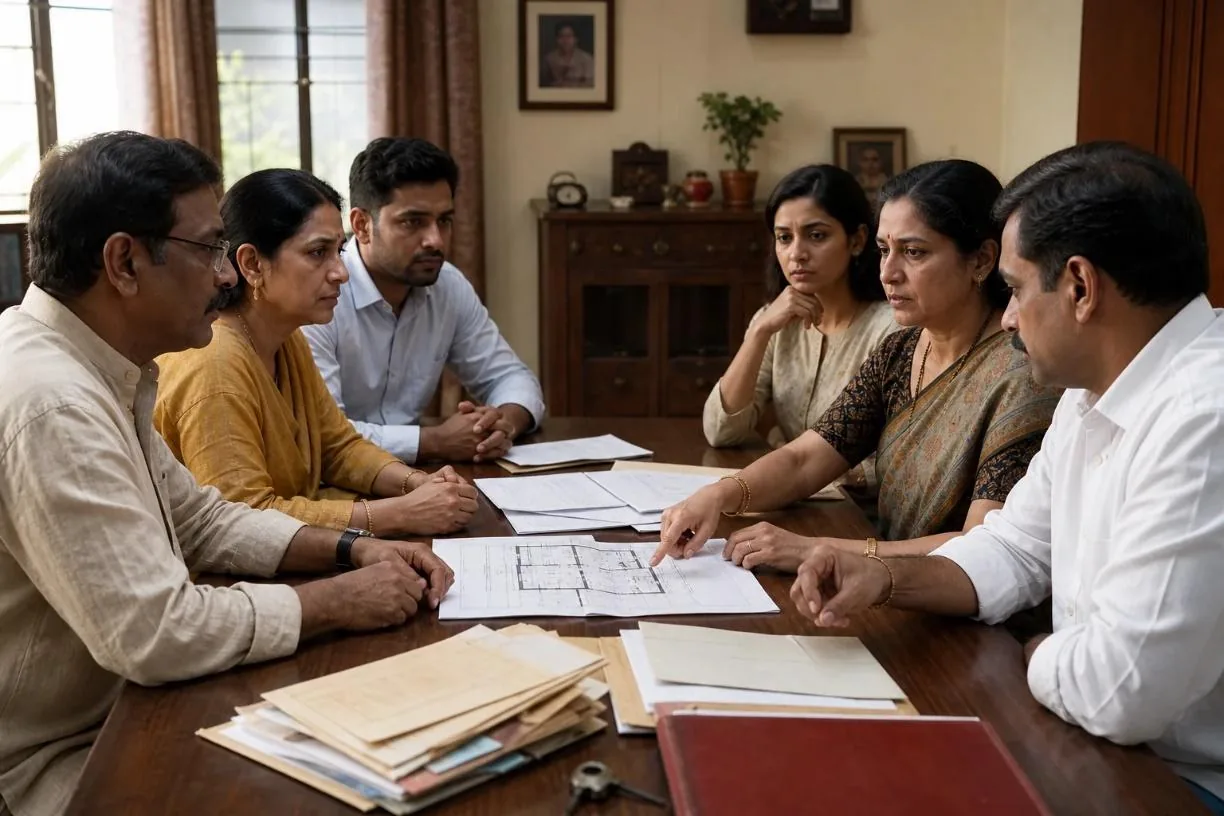
There's a difference between a marriage going through a difficult patch and a marriage that is, in any meaningful sense, over. Most couples live somewhere in between for years, not happy, not separated, just stuck. The hardest part isn't usually the legal process. It's figuring out, honestly, which side of that line you're actually on.
Indian law has spent decades wrestling with this exact question, and the answers that have emerged from the Supreme Court offer something genuinely useful here: not just legal grounds for divorce, but a clearer way of thinking about when a marriage has crossed from "struggling" into "irretrievably broken." This guide walks through that legal perspective, so you can make a clearer decision, whatever it turns out to be.
The Legal Concept That Changes Everything: Irretrievable Breakdown
Indian matrimonial law, for the most part, still works on a fault-based system, you typically need to show specific grounds like cruelty, desertion, or adultery to get a divorce, unless both spouses mutually agree to separate. But Indian courts have, over nearly two decades, developed and increasingly relied on a separate, more honest lens: irretrievable breakdown of marriage, the idea that a marriage can be so completely and permanently dead, in substance, that continuing to enforce it legally serves no one.
This concept isn't yet written into the Hindu Marriage Act itself. But the Supreme Court has applied it repeatedly, and it offers a genuinely useful framework for anyone trying to assess their own situation honestly.
What Courts Actually Look At
Based on how the Supreme Court has approached this question across multiple cases, the markers of an irretrievably broken marriage typically include:
- Length of separation , courts have generally treated a separation of six years or more as significant evidence that the marriage has failed in substance, not just in mood
- Failed reconciliation attempts , genuine efforts at counselling, mediation, or court-led conciliation that have not worked
- Multiple ongoing legal proceedings between the spouses , cross-complaints, criminal cases, and civil suits often signal that the relationship has moved beyond repair
- No realistic prospect of cohabitation , not just unwillingness, but a genuine, demonstrable absence of any path back to living together
- The marriage existing only on paper , where the emotional, physical, and practical relationship has ended entirely, but the legal tie remains
The Case That Started This Shift: Naveen Kohli v. Neelu Kohli (2006)
In Naveen Kohli v. Neelu Kohli (2006) 4 SCC 558, the Supreme Court dealt with a couple who had been married since 1975, with three children, whose relationship had deteriorated into a decade of separation, numerous criminal complaints filed against each other, and complete breakdown of trust. The Court granted the divorce on grounds of cruelty, but went further, observing that when a marriage exists only as a legal fiction with no real relationship left, continuing to enforce that legal tie causes more harm than good. The Court explicitly recommended that Parliament amend the Hindu Marriage Act to recognise irretrievable breakdown as an independent ground for divorce.
That legislative amendment still hasn't happened nearly two decades later. But the judgment fundamentally shifted how courts think about dead marriages, and it remains one of the most frequently cited rulings in Indian matrimonial law.
The 2023 Ruling That Changed the Practical Reality: Shilpa Sailesh v. Varun Sreenivasan
If Naveen Kohli identified the problem, Shilpa Sailesh v. Varun Sreenivasan (2023) 4 SCC 692 gave courts a concrete tool to act on it. In this Constitution Bench judgment, the Supreme Court held that it has the power, under Article 142 of the Constitution ("complete justice" powers), to directly grant a divorce on the ground of irretrievable breakdown, even where one spouse opposes it, and even though this ground doesn't exist in the Hindu Marriage Act itself.
Need a Lawyer for clarity on your case?
The Court was careful to set limits: this is an exceptional power, available specifically through the Supreme Court, exercised only after weighing factors like the length of cohabitation and separation, the number of failed reconciliation or mediation attempts, and the impact of prior legal proceedings on the relationship. The same judgment also confirmed that the six-month cooling-off period under Section 13B of the Hindu Marriage Act (for mutual consent divorce) can be waived where it would only prolong unnecessary suffering , building on the earlier ruling in Amardeep Singh v. Harveen Kaur (2017).
Together, these rulings mean something practical for anyone wondering "is my marriage really over": Indian law increasingly recognises that a marriage that exists only on paper, with no real relationship behind it, is not a marriage worth preserving for its own sake.
How to Actually Assess Your Own Situation
Drawing from how courts evaluate this, here are honest questions worth sitting with:
- How long have you genuinely been living separate lives, not just physically apart occasionally, but emotionally and practically disengaged?
- Have you tried reconciliation, counselling, or mediation in good faith? Courts place real weight on this, not because trying is mandatory, but because it reveals whether breakdown is genuine or temporary.
- Is there an ongoing pattern of legal or interpersonal conflict, cross-complaints, restraining orders, repeated disputes that has fundamentally damaged trust beyond repair?
- If you imagine five more years exactly like the last year, is that something you can live with? This is, in essence, what "irretrievable" means in practice.
- Is the relationship causing measurable harm, to your mental health, your finances, your children's stability , that continuing the marriage will not fix?
If your honest answers point toward a marriage that exists in name only, the legal system increasingly has pathways designed for exactly that reality.
What This Means for Your Options
If your situation reflects genuine, long-standing breakdown:
- Mutual divorce under Section 13B remains the fastest, least adversarial route if both spouses can agree on settlement terms , and following Amardeep Singh and Shilpa Sailesh, even the standard cooling-off period can potentially be waived in genuine cases
- Contested divorce on grounds of cruelty or desertion remains available if one spouse doesn't consent, and the Naveen Kohli precedent specifically supports cases where prolonged separation and conflict demonstrate the marriage has failed in substance
- The Article 142 route (direct Supreme Court intervention) is reserved for genuinely exceptional cases and isn't a practical first step for most people , but it confirms the direction Indian family law is moving in
A specialist family court lawyer in India can help you understand realistically which path applies to your specific facts, rather than guessing based on what you've read online.
If You're Not Sure Yet, That's Also Information
Not everyone reading this is at the "irretrievably broken" stage. Some marriages go through genuinely difficult years and recover. The honest assessment above isn't a test you need to pass to justify a decision, it's a way of getting clarity, even if that clarity is "we're not there yet, but we need help."
How Fintolit Helps You Get Real Clarity
Figuring out whether a marriage is truly over, legally and practically, is not something to work through with internet searches and guesswork. It deserves a real conversation with someone who has actually handled cases like yours.
Fintolit is a DPIIT-certified legal services platform, and every lawyer in our network is rigorously vetted, specialists, not generalists, each with 10+ years of active courtroom experience specifically in family law. When you book a consultation, you're speaking with someone who has represented people through exactly this decision, not someone offering generic advice.
Here's what you get when you work with Fintolit:
Need a Lawyer for clarity on your case?
- A dedicated case manager who handles your case personally and with discretion
- A 60-minute consultation with a senior specialist lawyer , flat fee, no per-minute meter, full time to actually talk through your situation
- 15 days of direct lawyer access , reach out anytime within this window for follow-up questions as things become clearer
- A written consultation summary and legal roadmap , a documented, honest assessment of where you stand and what your realistic options are
- 24x7 case manager support , for the moments when clarity is needed outside business hours
- Fixed, transparent pricing , complete clarity on cost, at a time when little else feels clear
- End-to-end support as a one-stop solution , beyond the consultation, Fintolit handles everything your advocate recommends: drafting, settlement negotiation, custody documentation, and full representation through to resolution, whether that's reconciliation support, mutual divorce, or contested proceedings
You don't need to have decided anything yet. You just need an honest, informed conversation.
Visit Fintolit to book a confidential consultation with a specialist divorce advocate.
Frequently Asked Questions
1. Is "irretrievable breakdown of marriage" a legal ground for divorce in India? Not under the Hindu Marriage Act directly, it isn't yet a codified statutory ground. However, the Supreme Court has applied it through Article 142 in exceptional cases (Shilpa Sailesh v. Varun Sreenivasan, 2023) and has used it as supporting reasoning in granting divorce on the ground of cruelty (Naveen Kohli v. Neelu Kohli, 2006).
2. How long do we need to be separated before a marriage is considered "irretrievably broken"? There's no fixed legal threshold, but courts have generally treated separation of six years or more, combined with failed reconciliation and no realistic prospect of cohabitation, as significant evidence supporting this conclusion.
3. Can I get a divorce if my spouse refuses to agree? Yes, through a contested divorce on specific legal grounds like cruelty, desertion, or adultery under the Hindu Marriage Act. A family court advocate in India can assess which grounds genuinely fit your situation.
4. What's the fastest legal route if both of us agree the marriage is over? Mutual divorce under Section 13B of the Hindu Marriage Act is generally the fastest and least adversarial option, particularly with the cooling-off period waiver now available in genuine cases following Amardeep Singh v. Harveen Kaur and Shilpa Sailesh v. Varun Sreenivasan.
5. Does trying counselling or mediation hurt my case if I later decide to divorce? No, courts generally view genuine reconciliation attempts favourably, as they demonstrate the breakdown is real rather than impulsive. It strengthens, rather than weakens, a later case for divorce if reconciliation fails.
6. Can the Supreme Court grant a divorce even if there's no statutory ground? In exceptional cases, yes. Under Article 142 of the Constitution, the Supreme Court can directly dissolve a marriage on the ground of irretrievable breakdown, even without a recognised statutory ground and even if one spouse opposes it, as clarified in Shilpa Sailesh v. Varun Sreenivasan.
7. How do I find the right divorce lawyer online in India for my situation? Look for a platform offering verified, experienced family law specialists and a structured first consultation, rather than a generic legal directory. Fintolit's DPIIT-certified panel connects you directly with vetted specialists who have 10+ years of active courtroom experience in family law specifically.
You're just getting to the good part.