For many senior citizens, the idea of "needing a lawyer" brings up images of crowded court corridors, long waits, and confusing paperwork. It's no surprise that many elderly people quietly live with legal problems , a son who won't let them live peacefully in their own home, a property dispute that's dragged on for years, a will that was never properly made , simply because the process of finding and meeting a lawyer feels too difficult.
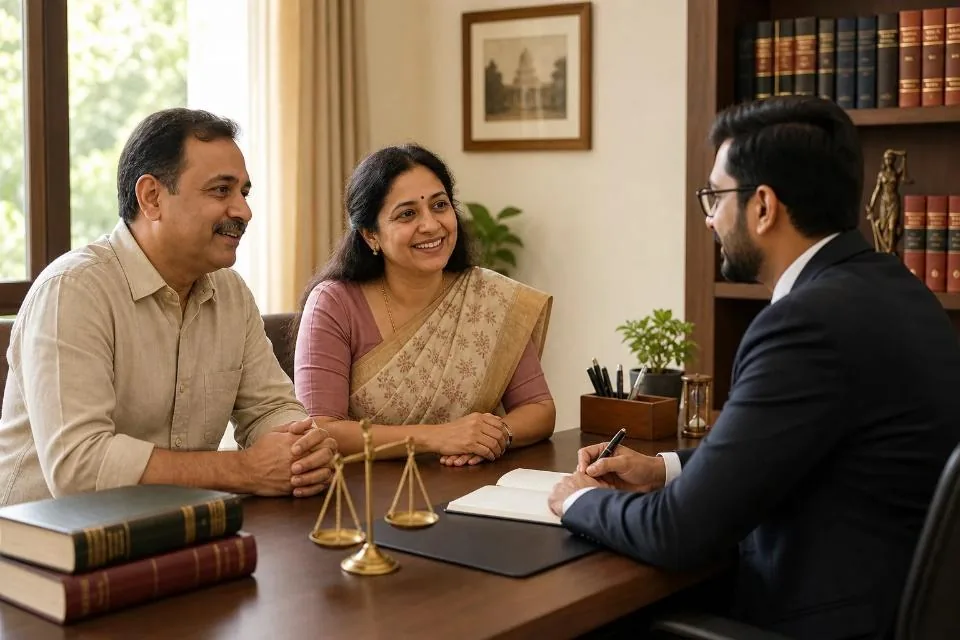
Online legal consultation has changed this completely. You can now speak to a qualified, experienced lawyer from your own home, on a phone or video call, without travelling anywhere or sitting in a waiting room. This guide walks you through exactly how it works, step by step, and what legal protections exist specifically for senior citizens in India that you may not know about yet.
Why Online Legal Consultation Works Especially Well for Senior Citizens
- No travel required , particularly helpful if mobility, health, or distance makes visiting a lawyer's office difficult
- A family member can join the call , whether you live with children or not, someone you trust can be part of the conversation for support
- No waiting rooms or long queues , your appointment happens at a time that suits you
- Everything is explained at your own pace , a good consultation isn't rushed, and you can ask the lawyer to repeat or simplify anything
- A written summary afterward , so you have something to refer back to, rather than relying only on memory of what was discussed
Common Legal Issues Senior Citizens Face That a Lawyer Can Genuinely Help With
- Being mistreated or denied basic care by children or relatives, despite owning property they live in
- Property disputes , children occupying a senior citizen's home without permission, or refusing to vacate
- Maintenance , not receiving financial support from children who are legally obligated to provide it
- Wills and succession planning , making sure your property goes where you intend, clearly and without future disputes
- Power of Attorney concerns , understanding what you're signing before you sign it
- Elder abuse or harassment, including threats or pressure to transfer property
- Pension, insurance, or banking disputes

Step-by-Step: How to Get an Online Legal Consultation
Step 1: Identify What's Actually Bothering You
You don't need to know the "legal name" for your problem before reaching out. Simply write down, in your own words, what's happening, for example, "My son and his wife are living in my house and won't let me use the kitchen" or "I want to make sure my daughter gets my flat after I'm gone." A good lawyer will figure out the legal framework; you just need to describe the situation honestly.
Step 2: Gather What Documents You Already Have
You don't need everything, and a lawyer can guide you on what's still needed, but if you have any of the following, keep them handy:
- Property ownership papers (sale deed, registry, or allotment letter)
- Any prior complaints filed with police or local authorities
- Bank statements, if the issue involves money or maintenance
- Any written communication (letters, messages) related to the dispute
Step 3: Book Your Consultation
This is usually as simple as visiting a website, filling in a short form with your name, contact number, and a brief description of your issue, and choosing a convenient time. A platform like Fintolit will then connect you with a specialist lawyer suited to your specific situation, you don't need to search for the "right kind" of lawyer yourself.
Step 4: Have the Consultation, With Support If You Want It
On the day of your call, you can have it over the phone or on video, whichever feels more comfortable. There's no harm, and often real benefit, in having a trusted family member or friend present, particularly to help note down what's discussed. A good lawyer will explain your options clearly, without rushing or using excessive legal jargon you can't follow.
Need a Lawyer for clarity on your case?
Step 5: Receive a Written Summary
After the consultation, you should receive a written record of what was discussed and what your options are, not just a verbal conversation you have to remember. This becomes your reference point for whatever you decide to do next.
Step 6: Decide on Next Steps, In Your Own Time
You're never obligated to act immediately. A consultation gives you clarity. Whether you choose to send a legal notice, file a formal complaint, get a will drafted, or simply understand your rights for now, that decision is yours, made with proper information.
The Law That Protects You: Maintenance and Welfare of Parents and Senior Citizens Act, 2007
This is one of the most important, and most underused, laws for elderly Indians. It requires children and relatives to provide maintenance to senior citizens, and it establishes a fast, simple Tribunal process (separate from the regular, slower court system) specifically to resolve these disputes.
Real Cases Where Senior Citizens Won
Rajeswar Prasad Roy v. The State of Bihar & Ors. (2025) , A 75-year-old retired engineer had to fight all the way to the Supreme Court after his son and daughter-in-law occupied his self-acquired property, threatened him with false criminal cases, and disrupted his ability to even run a guesthouse on his own land. The Maintenance Tribunal had originally ordered their eviction, but this was challenged through multiple courts. The Supreme Court restored the eviction order, observing that allowing such harassment to continue would defeat the entire purpose of the law protecting senior citizens. The Court gave the son and daughter-in-law a firm deadline to vacate.
S. Vanitha v. Deputy Commissioner, Bengaluru Urban District (2021) , In this important Supreme Court ruling, the Court clarified that Tribunals under the Senior Citizens Act do have the power to order eviction where it's genuinely necessary to protect a senior citizen's rights, even when the case touches on other family law issues. This case is frequently relied upon by courts across India whenever a senior citizen seeks the return of peaceful possession of their own home.
Urmila Dixit v. Sunil Sharan Dixit and Others (2025), a mother had transferred property to her son through a gift deed, with the clear understanding that he would care for and maintain her in return. When he failed to do so, the Supreme Court held that she could seek cancellation of that gift deed under Section 23 of the Act , confirming that a property transfer made on the condition of receiving care isn't permanent if that care is never actually provided.
These cases share a common, reassuring message: Indian courts treat this law as a genuine protective shield for the elderly, and they consistently interpret it generously in favour of senior citizens, even against their own children.
What to Expect If You Need to File a Complaint
If your consultation reveals that you have a genuine legal claim, for maintenance, eviction of a child from your property, or cancellation of a property transfer, the process is designed to be simpler than regular civil litigation:
- An application is filed before the Maintenance Tribunal (usually headed by the Sub-Divisional Magistrate or District Magistrate)
- The Tribunal is meant to resolve the matter relatively quickly , there's no requirement to engage in years of litigation
- There's no filing fee for senior citizens under this Act
- If you're unhappy with the outcome, you can appeal to the Appellate Tribunal, typically within 60 days
How Fintolit Makes This Simple, From the First Call
Reaching out for legal help shouldn't be the hardest part of solving your problem. Fintolit's online consultation process is built specifically to be approachable, no confusing legal forms, no need to already understand which law applies to you, and no pressure to commit to anything beyond an honest conversation.
Need a Lawyer for clarity on your case?
Fintolit is a DPIIT-certified legal services platform, and every lawyer in our network is rigorously vetted , specialists, not generalists, each with 10+ years of active courtroom experience, including in senior citizen and family property matters. You're connected with someone who genuinely understands cases like the ones above, not someone offering generic advice.
Here's what you get when you work with Fintolit:
- A dedicated case manager who handles your case personally, with patience and care
- A 60-minute consultation with a senior specialist lawyer , flat fee, no per-minute meter, full time to explain everything clearly
- 15 days of direct lawyer access , reach out anytime within this window with follow-up questions, at your own pace
- A written consultation summary and legal roadmap , so you and your family have something clear to refer back to
- 24x7 case manager support , for whenever you need reassurance or have a question
- Fixed, transparent pricing , no surprises, no hidden costs
- End-to-end support as a one-stop solution , beyond the consultation, Fintolit handles everything your lawyer recommends: drafting your maintenance application, your will, your legal notice, or representing you before the Tribunal , all the way through to resolution
You don't need to figure this out alone, and you don't need to leave your home to get started.
Visit Fintolit to book your first online legal consultation today.
Frequently Asked Questions
1. Do I need to be comfortable with technology to have an online legal consultation? No. A simple phone call works just as well as a video call. If you're unsure how to use video calling, the case manager can guide you, or you can simply opt for a phone consultation instead.
2. Can my son or daughter join the consultation with me? Yes, absolutely. Many senior citizens find it helpful to have a trusted family member present, especially to help remember details discussed during the call.
3. What if my problem involves the very family member who might be helping me with the call? You can have the consultation entirely on your own, privately, without any family member present, this is your right, and the lawyer will keep your conversation confidential.
4. Is there a fee for filing a complaint under the Senior Citizens Act? No. Applications under the Maintenance and Welfare of Parents and Senior Citizens Act, 2007 generally do not require a filing fee, making this an accessible legal route for elderly citizens.
5. Can I get my own house back if my son and his wife are living there and treating me badly? Yes, potentially. As seen in cases like Rajeswar Prasad Roy and S. Vanitha, courts have repeatedly upheld the eviction of children and relatives from a senior citizen's self-acquired property where there's been mistreatment or a failure to provide proper care, even when the property is occupied by the child.
6. I gave my property to my child on the condition that they take care of me, but they haven't. Can I undo this? Yes. Following the Supreme Court's ruling in Urmila Dixit v. Sunil Sharan Dixit, a property transfer made on the understanding of receiving care and maintenance can be cancelled if that care isn't actually provided.
7. How do I know which kind of lawyer I need for my specific issue? You don't need to know this in advance. Simply describe your situation honestly during booking, and the platform will connect you with a lawyer genuinely suited to your specific concern, whether its property, maintenance, wills, or something else entirely.
You're just getting to the good part.