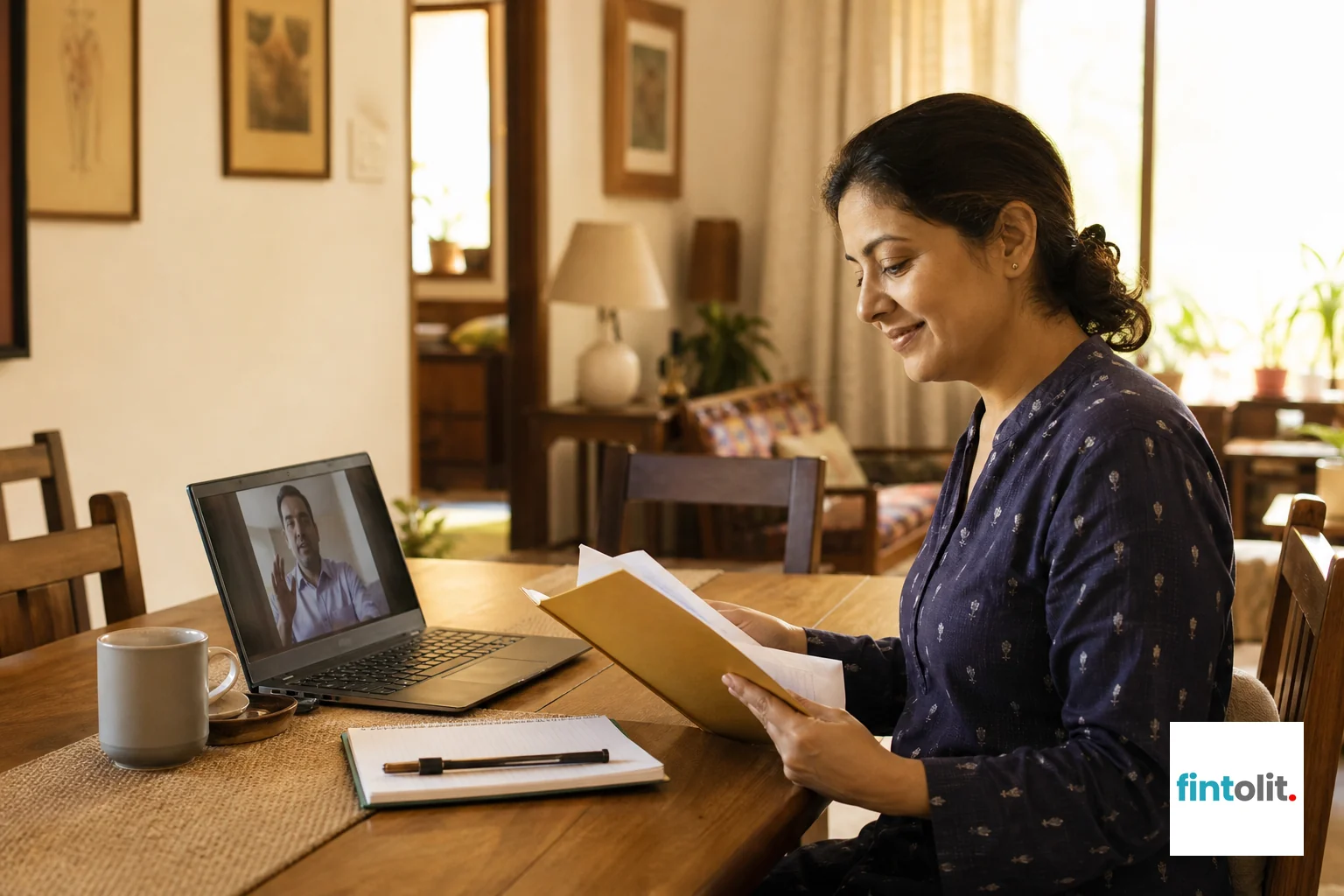

Talking to a lawyer often means sharing some of the most sensitive information in your life, financial troubles, family disputes, health records, or details of a legal complaint. It's completely reasonable to wonder whether that same level of confidentiality holds up when the conversation happens over video call instead of across a desk. Here's a clear, honest answer.
Confidentiality Doesn't Depend on the Medium, It Depends on the Safeguards
The short answer is: online legal consultations can be just as confidential as in-person ones, provided the right safeguards are actually in place. The legal protections around your communication with a lawyer don't disappear because the conversation happens over video. What matters is whether the platform, the process, and the people involved are actually built to protect that confidentiality.
Attorney-Client Privilege Applies Regardless of Format
Communications between you and your lawyer, made in the course of seeking professional legal advice, are protected under Indian law, a lawyer generally cannot be compelled to disclose what you've shared with them without your consent. This protection exists under statutory evidence law and is reinforced by professional conduct rules that bind every practicing advocate in India, who carries an independent ethical obligation to maintain client confidentiality.
This privilege isn't tied to a physical meeting room. It applies just as fully whether you're sitting across a desk or speaking over a secure video call, the determining factor is the professional nature of the communication, not the channel through which it happened.
India's Data Protection Law and What It Means for You
Beyond attorney-client privilege itself, there's now a dedicated legal framework governing how your personal data is collected, stored, and used: the Digital Personal Data Protection Act, 2023 (DPDPA), with detailed implementing rules notified in late 2025 and now being rolled out in phases. This law is significant for anyone sharing personal or sensitive information with any digital service, including legal platforms. Key protections it establishes include:
- Purpose limitation, your data can generally only be used for the specific purpose it was collected for, not repurposed without your knowledge
- Consent requirements, clear, informed consent is required before your personal data is processed in most circumstances
- Your rights as a "data principal", including the ability to access, correct, and request deletion of your personal data
- Breach notification obligations, organisations are required to report data breaches and take corrective action
- A dedicated regulatory body, the Data Protection Board of India, established to oversee compliance and handle grievances, with the power to impose significant penalties for serious violations
While full implementation is rolling out in stages, the direction is clear: any legitimate online legal service should already be operating with these principles in mind, not waiting for every enforcement deadline to take effect before taking privacy seriously.
What "Confidential" Should Actually Mean in Practice
When evaluating whether an online legal consultation is genuinely secure, look for these concrete practices rather than vague reassurances:
Secure, Encrypted Communication Channels
Video calls and document sharing should happen over platforms that use proper encryption, not generic, unsecured tools that weren't designed with confidential professional communication in mind.
Limited, Need-to-Know Access
Your case details shouldn't be visible to anyone beyond the people actually working on your matter, your assigned lawyer and case manager, not a broader team with no real role in your case.
No Unauthorised Recording or Sharing
Consultations shouldn't be recorded or stored beyond what's necessary for your own reference, and certainly never shared externally without your explicit knowledge and consent.
Clear Data Retention and Deletion Practices
You should be able to understand (and ideally request) how long your documents and case information are retained, and have a path to request deletion once your matter concludes, consistent with your rights as a data principal under the new framework.
Need a Lawyer for clarity on your case?
Secure Document Storage
Documents you share, property papers, financial records, medical reports, should be stored in systems with proper access controls, not floating in personal email inboxes or unsecured shared drives.
Questions worth Asking Before Your Consultation
- How my video consultation is secured, what platform is being used, and is it encrypted?
- Who, specifically, will have access to the documents I share?
- How long will my information be retained, and can I request its deletion later?
- Is my consultation recorded, and if so, who can access that recording?
- What happens to my documents and case details if I decide not to proceed further?
A legitimate, well-run legal service should be able to answer these clearly and without hesitation.
What Happens to Your Documents After the Consultation?
This is worth asking about directly. Ideally:
- Documents are retained only as long as genuinely necessary for your case or as required by professional record-keeping obligations
- Access remains limited to those actively working on your matter
- You have a clear way to request information about what's been retained, and to request deletion once appropriate.
Red Flags to Watch For
- Vague or evasive answers when you ask about data handling practices
- No clear privacy policy or data protection terms available before you share sensitive documents
- Communication happening over personal messaging apps or unsecured email as the default, rather than a structured, secure system
- No clarity on who specifically is handling your case versus a generic, unnamed "team"
How Fintolit Protects Your Privacy
Confidentiality isn't an afterthought in how Fintolit is structured, it's built into how every consultation and case is handled from the start.
When you work with Fintolit, here's what's included:
- A dedicated case manager who personally handles your case, meaning your sensitive details are managed by a known, accountable individual, not scattered across an anonymous team
- A full 60-minute consultation with a senior specialist lawyer, a focused, professional conversation protected by attorney-client confidentiality, conducted without per-minute billing pressure that might otherwise rush sensitive discussions
- 15 days of direct lawyer access, so follow-up questions go straight to the same lawyer who already understands your case, rather than being re-explained to someone new
- A written consultation summary and legal roadmap, documented securely and shared only with you, giving you a reliable record without exposing your case details unnecessarily
- 24x7 case manager support, handled by your assigned case manager, maintaining continuity and accountability rather than routing sensitive queries through unfamiliar contacts
- Fixed, transparent pricing, with full clarity from day one, so there's no incentive to extract additional sensitive information beyond what's actually needed for your case
- End-to-end support, meaning your information doesn't need to be re-shared with multiple disconnected vendors as your case moves from consultation to drafting, documentation, and representation; it stays within one coordinated, accountable process
You bring your situation and your documents in confidence; Fintolit's structure is built to keep it that way throughout your case.
To get started, visit www.fintolit.com and book your consultation.
Conclusion
Confidentiality in an online legal consultation isn't automatically weaker than an in-person meeting, but it isn't automatically strong either. It depends entirely on whether the platform and process you're using actually implement real safeguards: secure communication channels, limited access, clear data handling practices, and a genuine respect for the attorney-client privilege that already protects your communications under Indian law. Asking the right questions upfront is the simplest way to make sure your sensitive legal matter stays exactly that, confidential.
Frequently Asked Questions
Q1: Is attorney-client privilege weaker for online consultations compared to in-person meetings? No. The privilege protects the professional nature of the communication itself, not the format in which it took place. It applies equally to online and in-person consultations.
Need a Lawyer for clarity on your case?
Q2: What law governs how my personal data is handled by an online legal service in India? The Digital Personal Data Protection Act, 2023, along with its implementing rules notified in 2025, governs how personal data must be collected, processed, and protected, with a dedicated regulatory board overseeing compliance.
Q3: Can I ask a legal service how they store and protect my documents? Yes, and you should. A legitimate service should be able to clearly explain its data security practices, retention periods, and who has access to your information.
Q4: Should I be concerned about sharing documents over email for a consultation? Generally, secure, dedicated document-sharing systems are preferable to standard email, which typically lacks the same level of access control and security for sensitive legal documents.
Q5: Can I request that my data be deleted after my case concludes? Under India's data protection framework, individuals generally have rights to request access to and deletion of their personal data, subject to any legitimate retention requirements (such as professional record-keeping obligations).
You're just getting to the good part.