
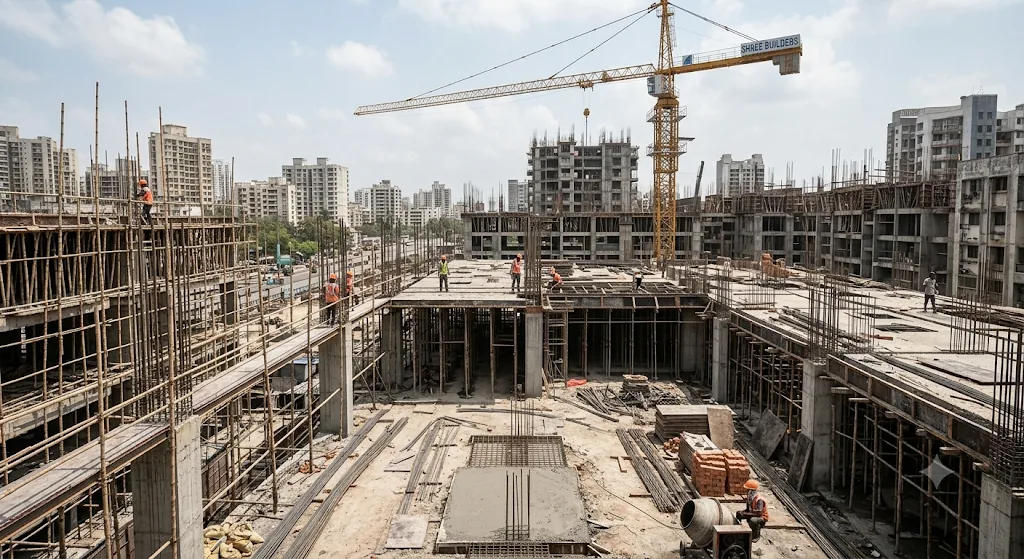
You paid your booking amount, took a home loan, and have been servicing EMIs for years, all while still paying rent because the builder hasn't handed over possession. If this sounds familiar, you're far from alone. Delayed possession remains one of the most widespread grievances homebuyers face in India, and unlike many consumer disputes, the law here is unusually clear and strongly in your favour.
This guide breaks down exactly when a delayed possession becomes legally actionable, which forum to approach, and the step-by-step process to hold the developer accountable , whether you want your money back with interest or want to stay invested and be compensated for the delay.
When Does a Delay Become Legally Actionable?
Not every minor slippage in a builder's timeline gives rise to a legal claim. A delayed possession typically becomes actionable when:
- The possession date committed in the Agreement for Sale (or booking letter, brochure, or written communication, if no registered agreement exists) has passed
- There is no legally valid extension of that date agreed to by you
- The builder has not handed over possession along with the Occupancy Certificate (OC) or Completion Certificate (CC) , courts have clarified that simply offering keys without these approvals does not count as valid possession
Importantly, even in the absence of a registered sale agreement, documents like allotment letters, payment receipts, brochures, or email communication specifying a possession date have been accepted by authorities as sufficient evidence of the builder's commitment.
Your Two Legal Routes: RERA and Consumer Court
This is where many homebuyers get confused, and choosing correctly matters more than people realise.
Route 1: RERA (Real Estate Regulation and Development Act, 2016)
Every state has its own Real Estate Regulatory Authority (RERA), and Section 18 of the Act is specifically designed for possession delays. Under Section 18(1), if a promoter fails to deliver possession as per the agreed timeline, the allottee has an absolute, unconditional right to either:
- Withdraw from the project and claim a full refund with interest, or
- Continue with the project and claim interest for every month of delay until possession is actually handed over
The Supreme Court, in landmark rulings including Newtech Promoters and Developers Pvt. Ltd. v. State of U.P. and M/s Imperia Structures Ltd. v. Anil Patni, has held that this right is "absolute and unconditional" , it cannot be diluted by contractual terms, the construction stage, or even the issuance of an occupancy certificate after your withdrawal notice. Builders cannot hide behind technicalities to deny this right.
Route 2: Consumer Court (Under the Consumer Protection Act, 2019)
The Supreme Court in Imperia Structures v. Anil Patni also clarified something crucial: remedies under the Consumer Protection Act are additional to, not replaced by, RERA. So a homebuyer can frame their grievance as deficiency in service, unfair trade practice, or misleading representation, and approach the consumer commission instead of , or sometimes alongside , RERA.
This route can be especially relevant when your case involves more than just delay: misleading sales brochures, false promises about amenities, deviation from sanctioned plans, or unfair contract clauses that one-sidedly favour the builder.
A Word of Caution: Choose Your Forum Carefully
Recent judicial trends suggest that once you formally elect one remedy (say, RERA) for a specific cause of action, switching to another forum (consumer court) for the same grievance later may not always be permitted. This makes forum selection a strategic decision, one best made after a proper assessment of your facts, the relief you actually want, and how strong your case is in each forum. This is precisely the kind of decision where getting it right the first time saves years of avoidable litigation.
Need a Lawyer for clarity on your case?
Is Delayed Possession an "Unfair Trade Practice"?
Often, yes. Courts have held that including one-sided, builder-favouring clauses in an agreement, for instance, charging the buyer steep interest on delayed payments while imposing no real penalty on the builder for delayed possession, can itself amount to an unfair trade practice under the Consumer Protection Act. This strengthens a homebuyer's case considerably, since unfair trade practice claims can support broader compensation beyond just interest on the refunded amount.
Step-by-Step: How to File a Consumer Complaint against the Builder
Step 1: Gather and Organise Your Documents
- Booking form, allotment letter, and the Agreement for Sale (registered or unregistered)
- Payment receipts and bank/loan statements showing amounts paid
- All written communication , emails, WhatsApp messages, brochures , referencing the promised possession date
- Any notices of delay, revised timelines, or force majeure claims sent by the builder
- RERA registration details of the project (available on your state's RERA website)
Step 2: Send a Formal Legal Notice
Before approaching any forum, a well-drafted legal notice to the builder, stating the breach, the relief sought (refund with interest, or delayed possession compensation), and a reasonable deadline to respond , creates a clear paper trail and often prompts a faster resolution or settlement offer.
Step 3: Decide Your Forum and Identify Jurisdiction
If proceeding via consumer court, jurisdiction depends on the value of consideration paid to the builder:
Given property values in most Indian cities, real estate disputes frequently fall under the State Commission or even the National Commission, unlike smaller consumer disputes. You can file in the commission covering either your residence/workplace or the builder's place of business.
If proceeding via RERA, the complaint is filed with your state's RERA Authority (for refund/interest/delay claims under Section 18 and Section 31) or before the Adjudicating Officer (for separate compensation claims under Sections 71-72), note that you may need to file two applications if you're seeking both interest and additional compensation.

Step 4: File the Complaint
- For consumer court: file via the e-Daakhil portal (edaakhil.nic.in) or physically at the relevant commission, with your documents annexed
- For RERA: file online or offline through your state RERA's portal, depending on the state's process
Step 5: Notice, Hearing, and Order
The forum issues notice to the builder, who must respond. Both sides present their case, typically faster and less formal than a regular civil suit, and a final order is passed directing refund with interest, continued possession with monthly interest, compensation, or a combination of these.
Step 6: Enforcement
Getting an order is only half the battle, enforcement can sometimes require follow-up action, especially with developers in financial distress. Authorities under both RERA (Section 63) and consumer law have powers to penalize non-compliance, but persistence and the right legal strategy at the enforcement stage matter.
What Compensation Can You Actually Claim?
Depending on the forum and the specifics of your case, you may be entitled to:
- Full refund of the amount paid, along with interest, if you choose to withdraw from the project
- Monthly interest for the entire period of delay, if you choose to remain invested and wait for possession (interest rates are typically linked to the State Bank of India's lending rate plus a prescribed margin, as set out in your state's RERA Rules)
- Compensation for mental agony and harassment, particularly where the consumer law route is used
- Reimbursement of rent paid during the delayed possession period, in appropriate cases, where demonstrable
- Litigation costs
Common Excuses Builders Use, And How Courts View Them
- "Force majeure" (natural disasters, regulatory hurdles, pandemic disruptions) , genuine force majeure events may justify some delay, but courts scrutinize these claims closely and don't accept vague or blanket invocations without evidence
- "We offered possession; you didn't take it" , doesn't hold if the offer wasn't accompanied by a valid Occupancy/Completion Certificate
- "Construction is now complete, so refund doesn't apply" , rejected by the Supreme Court; the right to a refund under Section 18 is not dependent on the construction stage at the time of your claim
- "There's no registered agreement, so you have no proof" , allotment letters, brochures, and payment receipts have been accepted as valid evidence of the promised timeline
How Fintolit Helps You Get Your Home, or You’re Money, Back
Real estate disputes involve high stakes, large sums of money, and a genuinely confusing choice between RERA, consumer court, and civil remedies , a wrong forum decision early on can cost you years. Fintolit's role is to make sure you don't have to navigate this alone or guess your way through it.
Need a Lawyer for clarity on your case?
When you bring your builder delay dispute to Fintolit, here's what's included:
- A dedicated case manager who personally handles your case from the first conversation through to resolution
- A full 60-minute consultation with a senior specialist lawyer , no meter running, no per-minute billing, just a complete, unhurried discussion of your case and the right forum strategy for your specific facts
- 15 days of direct lawyer access , reach out anytime within this window with follow-up questions, and Fintolit connects you straight to your lawyer
- A written consultation summary and legal roadmap , a clear, documented plan covering which forum to approach, what relief to seek, and the next steps, so you're never left guessing
- 24x7 case manager support , because property disputes often come with urgent questions that can't wait for office hours
- Fixed, transparent pricing , no hidden charges, no surprise billing, full clarity from day one
- End-to-end support , beyond the consultation, Fintolit handles everything your lawyer recommends: drafting the legal notice, preparing and filing the complaint (RERA or consumer commission), documentation, and representation at hearings
You bring the paperwork and the frustration of years of waiting; Fintolit's team builds the strategy and drives the case forward, so you can focus on your life while the legal process moves.
To get started, visit www.fintolit.com and book your consultation.
Conclusion
Delayed possession is not just an inconvenience, it's a statutory violation with real financial consequences for the builder, and real, enforceable remedies for you. Whether your priority is getting out of the project entirely with your money back, or staying invested while being compensated for every month of delay, the law gives you a clear, strong path forward.
The earlier you act, gathering documents, sending a proper legal notice, and choosing the right forum, the stronger and faster your outcome is likely to be.
Frequently Asked Questions
Q1: Can I claim a refund even if construction is now almost complete? Yes. The Supreme Court has held that your right to a refund under Section 18 of RERA is absolute and does not depend on the current stage of construction or the issuance of an occupancy certificate after you've sought withdrawal.
Q2: Should I file with RERA or the consumer court? Both are valid options, and the Supreme Court has confirmed consumer remedies are additional to RERA remedies. However, recent trends suggest you should choose carefully, as switching forums for the same grievance later may be restricted. This decision should be based on your specific facts and the relief you're seeking.
Q3: What if I never signed a registered Agreement for Sale? You can still pursue a claim. Allotment letters, brochures, payment receipts, and written communication specifying the possession date have been accepted as valid evidence of the builder's commitment.
Q4: Can I claim compensation for the rent I've been paying during the delay? In appropriate cases, yes, particularly where you can demonstrate the rent expense was a direct consequence of the builder's delay, alongside your interest and refund claims.
Q5: How long do I have to file a complaint? For consumer complaints, the general limitation period is 2 years from when the cause of action arose (i.e., when the agreed possession date passed without delivery). It's best not to delay, as evidence and documentation are easier to establish closer to the events in question.
You're just getting to the good part.